Window Film Performance Terms Explained

Commercial Window Film Guide

Understand window film performance terms before choosing a product

Choosing window film should not feel like reading an engineering report. Terms like VLT, SHGC, TSER, U-factor, Low-E, UV protection, glare reduction, and film-to-glass compatibility all matter, but only when they are understood in the context of your building.

This guide explains the numbers in plain English so you can better understand what window film can do, what it cannot do, and why the existing glass should be evaluated before a product is recommended.

Commercial window film does not start with the roll of film.

It starts with your glass, your building, and the problem you are trying to solve.

What this guide helps you understand

Window film selection is easier when the numbers are connected to real customer goals.


Performance Numbers

What the ratings actually mean

Understand VLT, SHGC, TSER, U-factor, emissivity, glare reduction, UV protection, and fading.


Glass Compatibility

Why the glass must be checked

Existing glass type, Low-E coatings, pane size, shading, and orientation can affect which films are appropriate.


Customer Goals

How different films solve different problems

Heat, glare, privacy, fading, safety, security, winter comfort, and appearance may require different products.


Professional Recommendation

How the right film is selected

The best recommendation balances performance, appearance, glass safety, compatibility, and your project goals.

The goal is not to memorize the numbers.
The goal is to understand which numbers matter for your building.

Quick Navigation

What This Guide Covers

Jump to the topic you need, or read straight through to understand how window film performance terms relate to comfort, heat, glare, fading, safety, and film-to-glass compatibility.

Solar Basics

How sunlight, glass, and visible light interact.


01 / Sunlight + Glass


02 / Solar Spectrum


03 / VLT

Heat + Glare

How film performance is measured for heat and visual comfort.


04 / SHGC


05 / TSER


06 / Glare Reduction


07 / U-Factor

Low-E + Glass Safety

How coatings, UV, fading, and absorbed heat affect film selection.


08 / Low-E + Emissivity


09 / Surface Numbers


10 / UV + Fading


11 / Solar Absorptance

Film Selection

How to compare products, drying behavior, and professional recommendations.


12 / Compatibility


13 / Film Types


14 / Similar Films


15 / Dry-Out


16 / Evaluation

01 / Solar Energy Basics

How sunlight interacts with glass

When sunlight strikes glass, three things can happen. Some solar energy is reflected away from the glass, some is absorbed
by the glass, and some is transmitted through the glass into the building.

These three values always work together. If more solar energy is reflected, less may be absorbed or transmitted. If more energy is absorbed, the glass may become warmer. If more energy is transmitted, more light and heat can enter the building.

For commercial buildings, this matters because glass can be a major source of heat gain, glare, fading, and comfort complaints.

Plain English Version

Sunlight does not simply go through glass. Some bounces away, some gets held by the glass,
and some enters the room.

Three paths of solar energy

Exterior

Solar energy approaches the glass.

Incoming


Glass

Indoors

Interior

Light and heat may enter the building.

Reflected

Solar energy bounces away from the glass.

Absorbed

Solar energy is held by the glass and can warm it.

Transmitted

Solar energy passes through the glass and enters the building.

Reflected + absorbed + transmitted = 100%
Window film changes this balance to help manage heat, glare, fading, and comfort.

02 / Solar Spectrum

UV, visible light, and infrared heat

Sunlight is made of different types of energy. For window film, the most important categories are ultraviolet, visible light, and
infrared.

Ultraviolet light

Ultraviolet light, often called UV, is invisible. It contributes to fading,
material deterioration, and UV exposure concerns. Quality window films block a very high percentage of ultraviolet radiation.

Visible light

Visible light is the daylight we see. It affects how bright a room feels.
Too much visible light can cause glare, screen visibility problems, and eye strain.

Infrared energy

Infrared energy is commonly associated with heat. Some infrared energy comes directly from the sun. Warm surfaces inside a building can also re-radiate heat as longer-wave infrared energy.

A good window film recommendation depends on which problem needs to be solved. A glare problem, a heat problem, a fading problem, and a winter comfort problem may not all require the same film.

Plain English Version

Window film is not just about making glass darker. It is about managing different parts of sunlight.

The solar spectrum

Window film products manage different parts of sunlight in different ways.


UV
Visible Light
Infrared

UV

Invisible energy that contributes to fading and material deterioration.

Visible light

Daylight that affects brightness, glare, privacy, and screen comfort.

Infrared

Energy commonly associated with solar heat and thermal comfort.

Different films manage different parts of the spectrum.
This is why two films can look similar but perform very differently.

03 / Visible Light Transmission

VLT: how light or dark the glass feels

VLT stands for Visible Light Transmission. It measures how much visible light passes through the glass and film system.

A higher VLT means more daylight comes through. A lower VLT means the glass will appear darker and allow less visible light through.

A high VLT film can keep a space bright and natural looking. A lower VLT film can reduce glare and may improve daytime privacy. However, darker is not always better. The right VLT depends on the room, the glass, the sun exposure, and how the space is used.

Plain English Version

VLT tells you how light or dark the glass will feel after film is installed.

Why VLT matters

Daylight
Glare
Interior brightness
Exterior appearance
Privacy
Screen visibility

Comparing visible light transmission

Higher VLT keeps more daylight. Lower VLT reduces visible light and usually reduces more glare.


Higher VLT

More daylight

Brighter, clearer, and more natural looking.


Mid VLT

Balanced

Often used when comfort and appearance both matter.


Lower VLT

Less glare

Darker appearance with more visible light reduction.

Darker is not automatically better.
The best VLT depends on the customer’s goal, the existing glass, sun exposure, and how the space is used.

04 / Solar Heat Gain

SHGC: how much solar heat gets inside

SHGC stands for Solar Heat Gain Coefficient. It measures how much solar heat is admitted through a window system.

SHGC is shown as a number from 0 to 1. The lower the SHGC, the less solar heat is admitted through the glass.

This is one of the most important numbers for solar control window film. A lower SHGC can help reduce solar heat gain in offices, schools, churches, retail spaces, conference rooms, lobbies, and other areas with uncomfortable sun exposure.

Plain English Version

SHGC tells you how much heat from the sun gets inside. Lower SHGC means less solar heat enters the space.

Lower SHGC can help with

Hot offices
Afternoon heat gain
West-facing glass
Cooling complaints
HVAC imbalance
Occupant discomfort

Higher SHGC vs. lower SHGC

SHGC helps compare how much solar heat is admitted through the window system.

Higher SHGC

More solar heat enters


More of the sun’s heat is admitted into the space.

Lower SHGC

Less solar heat enters


Less of the sun’s heat is admitted into the space.

Lower SHGC is usually better for reducing solar heat gain.
The right film still depends on the existing glass, sun exposure, appearance goals, and film-to-glass compatibility.

05 / Total Solar Energy Rejected

TSER: how much solar energy is rejected

TSER stands for Total Solar Energy Rejected. It is commonly used in the window film industry because many people find it easier to understand than SHGC.

TSER is expressed as a percentage. A higher TSER means the glass and film system rejects more total solar energy.

SHGC and TSER are closely related. SHGC tells you how much solar heat is admitted. TSER tells you how much solar energy is rejected.

Plain English Version

TSER tells you how much solar energy the window film system helps keep out.

Simple comparison

SHGCSolar heat admittedLower is better for reducing heat gain
TSERSolar energy rejectedHigher is better for rejecting solar energy

Same solar energy story, opposite directions

SHGC looks at what gets in. TSER looks at what is rejected.

Example for illustration


30% admitted

SHGC 0.30

70% rejected

TSER 70%

SHGC

Measures how much solar heat is admitted through the window system.

Lower number = less heat gain

TSER

Measures how much total solar energy is rejected by the glass and film system.

Higher percentage = more rejection

TSER is easier for many customers to understand.
SHGC is often more useful when comparing glass and film performance in technical specifications.

06 / Glare Reduction

Glare reduction: making bright rooms more usable

Glare reduction is mostly related to visible light. If a room receives more daylight than occupants can comfortably use, glare can make computer screens difficult to see, cause eye strain, and make work areas less comfortable.

Darker films generally reduce more glare because they lower visible light transmission. However, glare is not only about film darkness. It can also be affected by window orientation, time of day, screen placement, interior lighting, wall color, and the way the space is used.

Plain English Version

Glare reduction helps make bright rooms more usable, especially near screens, desks,
classrooms, and conference rooms.

Common glare problem areas

Offices with screens
Conference rooms
Classrooms
Reception areas
Retail counters
Restaurants
Open workspaces
West facing glass
Large curtain walls

Glare is about usable light

The goal is not always to make the glass as dark as possible. The goal is to make the space more comfortable and usable.

Before film

Too much visible light


GLARE

Bright light can wash out screens and make the space uncomfortable.

After film

More comfortable light


USABLE

Reduced visible light can improve screen visibility and comfort.

Glare reduction is tied to visible light, not just heat.
A film can reduce glare even when the main concern is screen comfort, occupant comfort, or room usability.

07 / U-Factor

U-factor: heat transfer through the window

U-factor, also called U-value, measures heat transfer caused by indoor and outdoor temperature differences.

This is different from solar heat gain. SHGC is about heat from the sun. U-factor is about heat moving through the window because one side is warmer than the other.

The lower the U-factor, the better the window is at slowing heat transfer. This matters most when customers are concerned about cold glass, winter comfort, heat loss, or sitting near windows during cold weather.

Plain English Version

U-factor tells you how well the glass slows heat from moving through it.

Why this matters

A building can have both summer and winter comfort issues. Solar control film may help reduce summer heat gain, while Low-E film is designed to help reduce radiant heat loss and improve comfort near glass.

Two different heat problems

SHGC and U-factor both involve heat, but they describe different conditions.

SHGC

Solar heat coming in

SUN

Solar energy


Glass + film

Indoor
solar heat

SHGC describes how much heat from the sun is admitted through the window system.

U-Factor

Heat moving through the window

Warm
inside
 

Window

Cold
outside

U-factor describes how quickly heat transfers through the window because one side is warmer than the other.

Lower U-factor means better insulating performance.
This is why Low-E glass and Low-E window film are often discussed when winter comfort or heat loss is the concern.

08 / Low-E + Emissivity

Low-E and emissivity: helping glass hold heat better

Low-E stands for low emissivity. Emissivity measures how easily a surface gives off heat as thermal radiation.

Regular glass has high emissivity, which means it can re-radiate a lot of heat. A Low-E surface has low emissivity, which helps reduce radiant heat transfer.

Low-E coatings and Low-E window films are used to help improve comfort and energy performance. In cold weather, a Low-E surface can help reflect room-side heat back into the occupied space instead of allowing as much radiant heat loss through the glass.

Plain English Version

Low-E helps glass hold onto indoor heat better. It does not create heat. It helps retain more of the heat already inside the building.

Why this matters

Low-E performance is especially important when the concern is winter comfort, cold glass, radiant heat loss, or people sitting near windows during cold weather.

What Low-E does

Low-E surfaces help reduce radiant heat loss by reflecting more room-side heat back into the occupied space.

Regular glass

More radiant heat can escape

Warm
room
 

Glass

Cold
side

Higher emissivity surfaces can give off more heat as thermal radiation.

Low-E surface

More room heat is reflected back

Warm
room
 

Low-E surface

Cold Ext.

Lower emissivity surfaces reduce radiant heat transfer and help improve comfort near glass.

Low-E does not make heat.
It helps reduce radiant heat loss so the building can retain more of the heat already inside.

09 / Low-E Surface Location

Why surface numbers matter

On a double pane insulated glass unit, the glass surfaces are numbered from the outside of the building to the inside of the room.

Surface #1 is the outside face of the exterior pane.

Surface #2 is the airspace side of the exterior pane.

Surface #3 is the airspace side of the interior pane.

Surface #4 is the room side surface.

The location of a Low-E coating changes how the glass performs. A Low-E coating on surface #2 is often used to help control incoming solar heat. Common in southern climates.

A Low-E coating on surface #3 is often associated with reducing heat loss while allowing more passive solar heat gain. Common in northern climates.

A Low-E film installed on surface #4 is on the room side of the glass. Room side Low-E film can help reduce radiant heat loss from the occupied space. Common in northern climates.

Plain English Version

Where the Low-E surface is located changes what it is best at doing.

Double pane surface numbering

Surface numbers follow the glass from outside to inside.

Out

Surface #1


Pane 1

Surface #2

Air

Surface #3


Pane 2

Surface #4

In

The coating location changes the job of the glass.

A coating facing the airspace can manage solar heat or heat loss differently than a film installed on the room side surface.

Surface #2

Often used for solar control and reducing incoming solar heat.

Surface #3

Often used where insulation and passive solar gain are priorities.

Surface #4

Room side location where Low-E film can reduce radiant heat loss.

Surface location affects both performance and film selection.
Low-E glass should be reviewed before choosing a window film product.

10 / UV Protection + Fading

UV protection helps slow fading, but it does not stop it.

Most quality window films block a very high percentage of ultraviolet radiation. UV protection helps reduce exposure to ultraviolet rays and can help slow fading of flooring, furnishings, artwork, merchandise, displays, fabrics, and interior finishes.

However, no window film or glass product can completely stop fading. UV is a major contributor, but fading is also affected by visible light, heat, material sensitivity, artificial lighting, humidity, chemical exposure, and time.

A commonly used fading breakdown estimates that approximately 40% of fading is caused by UV, 25% by visible light, 25% by heat, and 10% by miscellaneous factors. Actual results can vary depending on the material and environment.

Plain English Version

Window film helps slow fading, but it does not make interiors fade proof.

Fading can also be caused by

Visible light
Heat
Humidity
Dye stability
Chemical vapors
Artificial lighting
Material sensitivity
Time

What causes fading?

UV is the largest single factor, but it is not the only reason materials fade over time.

Common fading contribution estimate

Fading is caused by multiple factors

UV

40%


Visible light

25%


Heat

25%


Miscellaneous factors

10%


These percentages are useful for explaining why UV protection matters, but also why no film can completely eliminate fading.

What window film can do

Reduce major contributors to fading

UV

Quality film blocks a very high percentage of UV.

Light

Lower VLT films can reduce visible light exposure.

Heat

Solar control films can reduce solar heat gain.


11 / Solar Absorptance + Glass Safety

Solar absorptance, glass safety, and why glass must be checked first

Solar absorptance measures how much solar energy is absorbed by the glass and film system.

This matters because absorbed heat can increase the temperature of the glass. Under certain conditions, that can increase thermal stress.

Thermal stress is related to temperature differences across the glass. The center of the glass may heat up faster than the edge of the glass hidden under the frame. If the temperature difference becomes too large for the glass to handle, the glass can crack.

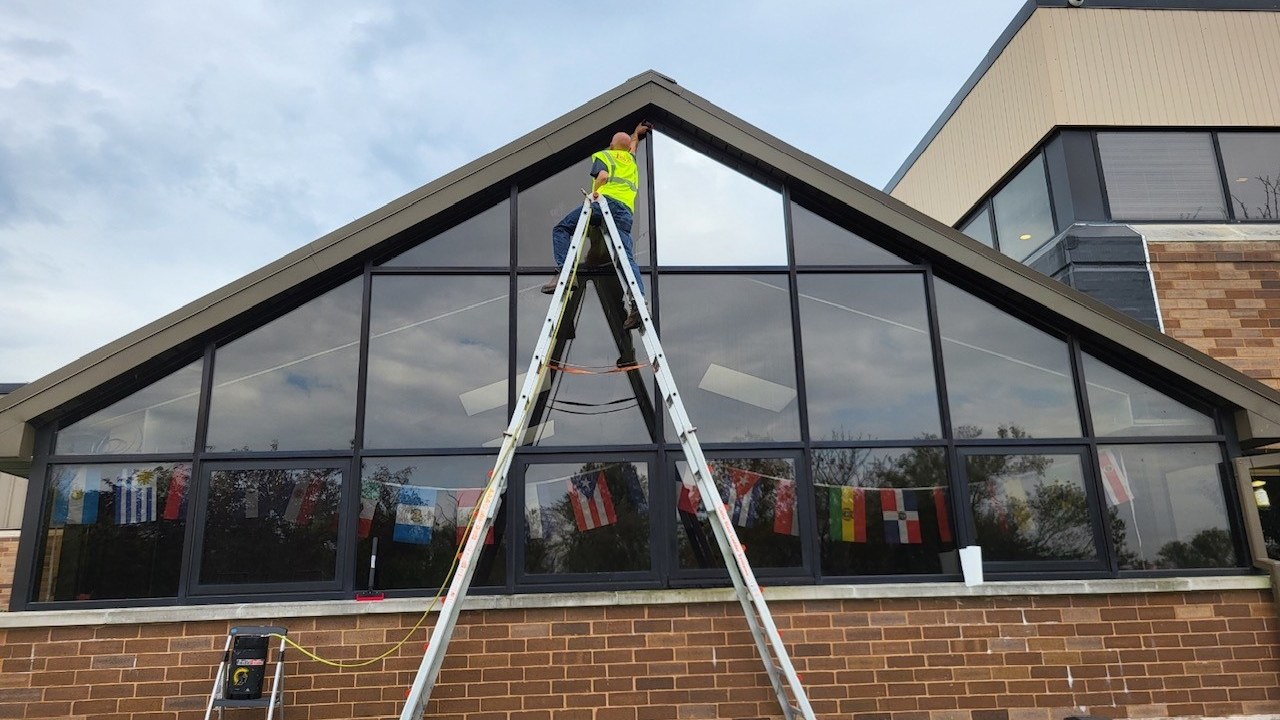
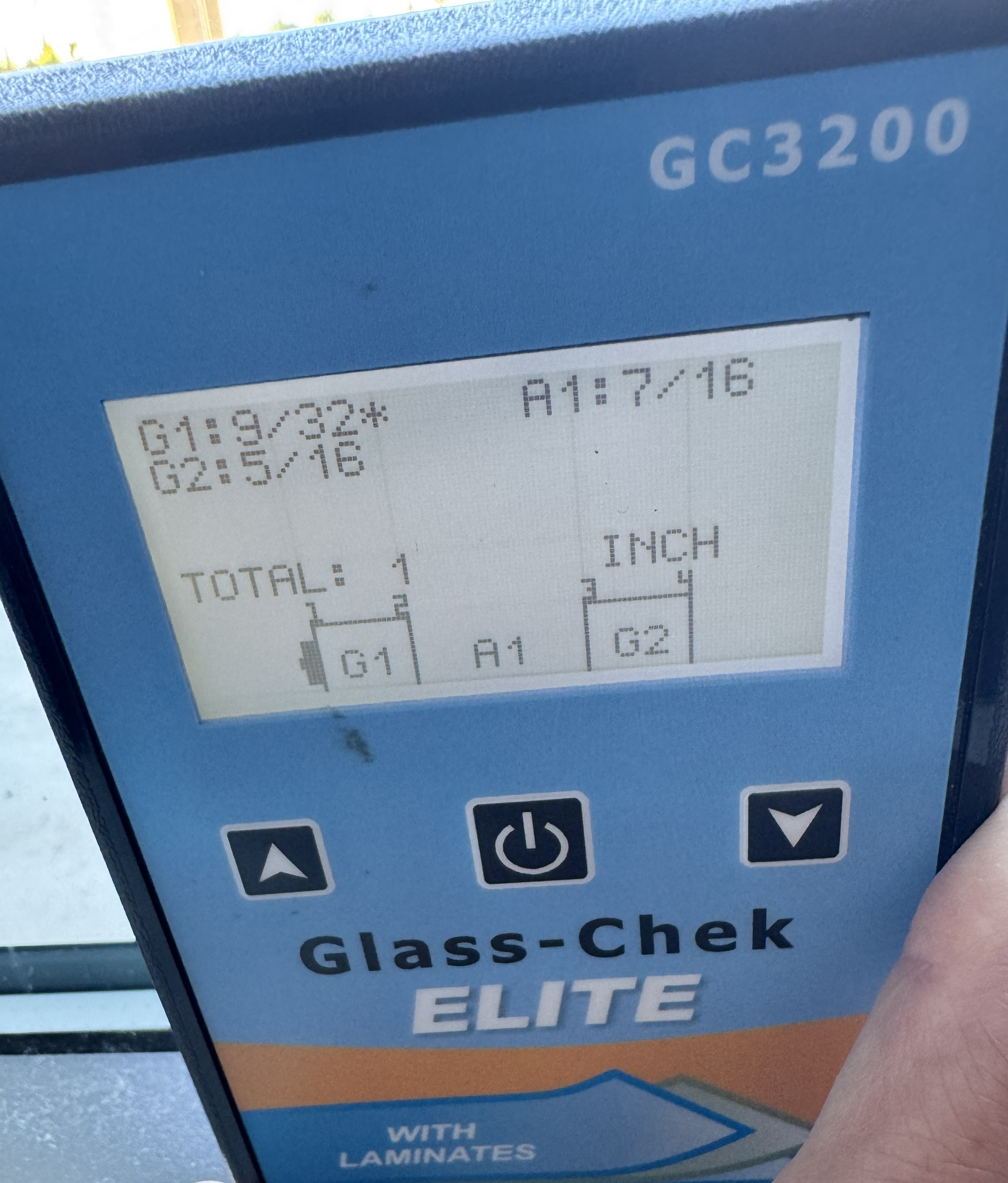
A glass meter is needed to identify the glazing onsite.

Before recommending film, a professional should check the existing glass construction and determine whether Low-E coatings are present. This helps confirm what type of glazing is onsite and whether the proposed film is appropriate for the glass.

A professional recommendation should always start with the glass. The installer needs to know whether the window is single pane, insulated glass, laminated glass, tempered glass, tinted glass, reflective glass, or Low-E glass before choosing the right product.

Checking the glass helps protect the customer, the warranty path, and the glass itself from avoidable thermal breakage concerns.

Plain English Version

Absorptance tells us how much heat the glass is holding. A professional checks the glass first so the recommended film is safe and appropriate for the window.

Important factors include

Glass type
Glass thickness
Pane size
Single pane or insulated glass
Low-E coating location
Existing tinted or reflective glass
Shading patterns
Building orientation
Interior blinds or shades
Manufacturer guidelines

Professional film selection starts with the glass

The goal is to match the film to the existing glazing, not force one product onto every window.

Step 1

Meter the existing glass

A glass meter helps identify the glass construction and whether Low-E coatings are present.

Step 2

Identify the risk factors

Glass type, Low-E location, pane size, existing tint, shading, and orientation all affect film selection.

Step 3

Check film-to-glass compatibility

Manufacturer guidelines help determine which products are appropriate for the existing glazing.

Step 4

Recommend the right film

The final recommendation should balance performance, appearance, warranty, and glass safety.

Why this matters

A darker or higher absorbing film may perform well on one building but be inappropriate on another. The glass must be evaluated before the film is selected.

The film recommendation starts with the glass.
This is how a professional reduces avoidable thermal breakage concerns and recommends a product with confidence.

12 / Film to Glass Compatibility

Choosing a safe film starts with identifying the glass

Not every window film can be installed on every type of glass. Before recommending a commercial window film, the existing glass should be evaluated for compatibility.

A professional evaluation starts with identifying what kind of glazing is onsite. A glass meter helps determine the glass construction and whether Low-E coatings are present. This information is then compared with manufacturer film to glass guidelines before a product is recommended.

This matters because the safest recommendation is not always the darkest film, the strongest number, or the most expensive product. The right film has to fit the customer’s goal and be appropriate for the glass.

Plain English Version

The best film is not just the film with the strongest numbers. It also has to be right for the glass and right for the customer’s problem.

Compatibility review may include

Glass meter reading
Glass type
Glass thickness
Single, double, or triple pane construction
Low-E coating location
Tinted or reflective glass
Pane size
Building orientation
Shading conditions
Interior blinds or shades
Manufacturer guidelines
Warranty requirements

From glass inspection to film recommendation

A professional recommendation balances glass safety, customer goals, performance, appearance, and warranty requirements.

Step 1

Identify the glass

Use a glass meter, visual inspection, and field measurements to understand the glazing construction and Low-E coating location.

Step 2

Understand the problem

Determine whether the customer needs heat control, glare reduction, privacy, fade protection, Low-E performance, safety, appearance improvement, or a combination of goals.

Step 3

Check compatibility

Compare the glass type, Low-E location, pane size, shading, and exposure conditions with manufacturer film to glass guidelines.

Step 4

Recommend the right film

Select a product that fits the customer’s needs while also protecting the glass, the warranty path, and the long term success of the installation.

The recommendation starts with the glass.
That is how a professional recommends a film that is both useful for the customer and appropriate for the existing glazing.

13 / Commercial Film Types

Common commercial window film types

Different window films solve different problems. Some are designed for solar heat control. Some reduce glare. Some improve privacy or appearance. Some help retain broken glass. Others help protect glass from scratching, graffiti, or bird strikes.

The right product depends on the building, the existing glass, the customer’s goal, and whether the film is compatible with the glass system.

This is why a professional recommendation should not be based on appearance alone. Two films may look similar but perform very differently once installed on the glass.

Plain English Version

Window film is not one product. Different films are built for different problems.

Common customer goals

Heat reduction
Glare control
Privacy
Appearance
Glass retention
Fade reduction
Bird strike reduction
Surface protection

Commercial window film category guide

Each film category has a different purpose. The best recommendation matches the film to the glass, the space, and the problem being solved.

Solar Control Film

Heat, glare, and comfort

Solar control film is designed to reduce solar heat gain, glare, and UV exposure.

Often used for:

Hot offices, west-facing glass, schools, retail spaces, restaurants, cooling complaints, and HVAC imbalance.


Learn more about solar control film

Low-E Window Film

Year-round comfort

Low-E film is designed to improve insulating performance by reducing radiant heat transfer.

Often used for:

Cold glass, winter comfort, older windows, year-round performance, and spaces where replacement is not practical.


Learn more about Low-E window film

Safety + Security Film

Broken glass retention

Safety and security film is designed to help hold broken glass together after impact.

Often used for:

Schools, churches, retail storefronts, offices, entry glass, forced-entry delay, and glass hazard reduction.

It should not be described as bulletproof, burglar-proof, or unbreakable.


Learn more about safety and security film

Decorative + Privacy Film

Privacy and design

Decorative and privacy films are used to obscure views, improve interior design, add branding, or create visual separation.

Often used for:

Conference rooms, interior glass walls, offices, medical spaces, schools, tenant buildouts, and custom graphics.


Learn more about decorative film


Learn more about privacy film

Anti-Graffiti Film

Sacrificial surface protection

Anti-graffiti film is a sacrificial protective layer applied to glass or smooth surfaces.

Often used for:

Storefronts, schools, transit areas, public-facing glass, restrooms, elevators, and high-traffic commercial areas.


Learn more about anti-graffiti film

Bird Strike Prevention Film

Making glass more visible to birds

Bird strike prevention film helps make glass more visible to birds and reduce collision risk.

Often used for:

Schools, universities, office buildings, courtyards, nature-facing glass, and large reflective glass areas.


Learn more about bird strike film

Product category is only the starting point.
The final recommendation should still consider the existing glass, sun exposure, customer goals, and manufacturer compatibility guidelines.

14 / Film Appearance vs. Performance

Why two films that look similar can perform differently

Two window films can look almost the same on a sample card or installed glass, but still perform very differently.

One film may reduce glare but absorb more heat. Another may allow a lot of visible light while rejecting more infrared energy. Another may be excellent for solar control but not appropriate for certain Low-E glass. Another may provide safety benefits but very little solar heat reduction.

This is why sample appearance alone is not enough. A professional recommendation should consider both the way the film looks and the way it performs on the existing glass.

Plain English Version

You cannot judge window film by darkness alone. Two films can look similar and do very different things.

Similar looking films may differ in

Visible light transmission
Solar heat gain
Total solar energy rejected
Solar absorptance
Reflectivity
Glare reduction
Low-E compatibility
Warranty path

Similar appearance does not mean similar performance

A film should be selected by the problem it solves, not just by how dark or reflective it appears.

Film A

Looks medium dark


Visible lightModerate
Heat rejectionModerate
AbsorptionHigher

Film B

Looks medium dark


Visible lightModerate
Heat rejectionHigher
AbsorptionLower

What the sample does not show

Performance depends on the numbers and the glass

Product data

VLT, SHGC, TSER, absorptance, reflectance, and U-factor all matter.

Existing glass

The same film can perform differently on clear, tinted, Low-E, laminated, or insulated glass.

Appearance is only one part of film selection.
The right product should match the glass, the exposure, the customer’s goal, and the manufacturer compatibility guidelines.

15 / Dry Out + Curing

Why window film may look hazy after installation

After window film is installed, it is normal for some moisture, haze, or small water pockets to be visible during the dry out period.

Window film is installed with a mounting solution. The installer removes as much solution as possible during installation, but a small amount can remain between the film and the glass. That moisture has to dry out over time.

Dry out time can vary based on film type, film thickness, glass type, sun exposure, temperature, humidity, shading, and interior conditions. Some high performance sputtered films, thicker safety films, and shaded or colder installations may take longer to fully dry.

Temporary haze during the dry out period is not the same thing as a failed installation. A professional installer should explain what is normal, what is not normal, and how long the drying period may take based on the product and jobsite conditions.

Plain English Version

Some films dry quickly. Some films need more time. Temporary haze after installation is often part of the normal drying process.

Dry out time can depend on

Film type
Film thickness
Safety film
Sputtered film construction
Glass type
Temperature
Humidity
Sun exposure
Shading
Interior conditions

What happens after installation

Film clarity improves as installation moisture leaves the film and glass system.

Step 1

Film is installed wet

Mounting solution allows the film to be positioned and squeegeed onto the glass.

Step 2

Moisture begins to dry out

Temporary haze, small water pockets, or a slightly milky appearance can be normal while trapped moisture evaporates.

Step 3

Adhesion builds

As moisture leaves, the adhesive bond develops and the film becomes clearer and more stable.

Step 4

Final clarity develops

The film reaches its finished appearance after the dry out period, which varies by product and conditions.

What is usually normal

Light haze, small moisture pockets, or a cloudy look can be normal during the dry out period. Large debris, lifting edges, creases, scratches, or obvious contamination should be reviewed by the installer.

Dry out is part of the installation process.
The installer should explain expected drying time and proper care before the film is cleaned or disturbed.

16 / Professional Evaluation

Why a professional evaluation matters

Window film performance numbers are helpful, but they do not tell the whole story. The right film depends on your glass, your building, your sun exposure, and what you are trying to improve.

A film that works well for one building may not be the right choice for another. Some customers need heat reduction. Others need glare control, privacy, fade reduction, Low-E performance, safety film, or a combination of several goals.

A professional evaluation helps make sure the film recommendation is not only useful, but also appropriate for the existing glass. That is especially important on insulated glass, Low-E glass, tinted glass, laminated glass, large panes, skylights, or heavily shaded glass.

Plain English Version

The best window film is not just the one with the best numbers. It is the one that solves your problem and is safe for your glass.

A good recommendation should consider

Your comfort problem
Existing glass type
Sun exposure
Glare concerns
Privacy needs
Appearance goals
Glass safety
Film compatibility
Warranty requirements
How the space is used

What this means for you

You should not have to guess which film is right. A professional recommendation should make the options clear.

Your Problem

We start with what you want to fix

Heat, glare, privacy, fading, security, winter comfort, and appearance are different problems. They may require different film types.

Your Glass

We check the glass before recommending film

The existing glass type, Low-E coatings, pane size, shading, and orientation can affect which films are safe and appropriate.

Your Options

We explain the tradeoffs

A darker film may reduce more glare but change the appearance. A highly reflective film may reject more heat but create a different look. A security film may need an attachment system to perform as intended.

Your Recommendation

You get a film system that fits the project

The final recommendation should solve the problem, fit the glass, protect the warranty path, and support long term performance.

The goal is confidence

A good evaluation should leave you understanding why a film was recommended, what it is expected to improve, and why it is appropriate for your glass.

The best film recommendation is specific to your building.
It should be based on your glass, your exposure, your goals, and manufacturer compatibility guidelines.

Commercial Window Film Guidance

Need help choosing the right commercial window film?

A good window film project starts with understanding your glass, your building, and what you are trying to improve.

Whether you need to reduce heat, lower glare, add privacy, protect interiors, improve glass safety, or support a commercial construction schedule, AAA Glass Tint can help you compare options and choose a film system that fits your building.

Step 1

We identify the glass

Existing glass type, Low-E coatings, pane size, and exposure can affect which films are appropriate.

Step 2

We compare the options

We help you understand the tradeoffs between heat rejection, glare control, appearance, privacy, safety, and cost.

Step 3

We recommend a safe fit

The final recommendation should solve your problem and be appropriate for the existing glass system.

We work with commercial properties, schools, churches, offices, retail spaces, municipal buildings, healthcare facilities, general contractors, and property managers throughout the Chicago area and Northern Illinois.

FAQ

Common questions customers ask before choosing window film

If you are comparing window film options, these answers can help you understand what matters before choosing a product.

Which window film is best for my building?

The best film depends on what you are trying to fix. Heat, glare, privacy, fading, winter comfort, safety, and appearance may each point toward a different product. The existing glass also needs to be checked before a recommendation is made.

Is darker window film better?

Not always. Darker film usually reduces more glare, but it may not be the best choice for every building. Some lighter films can still reduce a lot of solar heat while keeping the space brighter and more natural looking.

Will window film make my building cooler?

Solar control film can help reduce solar heat coming through the glass, especially on sunny exposures. The amount of improvement depends on the film, the glass, the direction the windows face, shading, and how the space is used.

How do I know if a film is safe for my glass?

The glass should be checked before film is recommended. A professional can use a glass meter and field evaluation to identify the glass type, Low-E coatings, pane construction, and other conditions that affect film compatibility.

Will window film stop fading?

No film can completely stop fading. Quality window film can help slow fading by blocking UV and reducing other contributors like visible light and heat, but furniture, flooring, displays, and finishes can still fade over time.

Can window film help with winter comfort?

Some Low-E window films can help reduce radiant heat loss through the glass. This can improve comfort near cold windows and help older glass perform better without replacing the entire window system.

Why does new window film sometimes look hazy?

Some haze or small moisture pockets can be normal after installation. Window film is installed with a mounting solution, and that moisture needs time to dry out. Drying time depends on the film, glass, weather, sun exposure, and interior conditions.

Is security window film bulletproof?

No. Security film is not bulletproof, burglar-proof, or unbreakable. It is designed to help hold broken glass together and may improve forced-entry resistance when the right film, glass, frame, and attachment system are used together.

Do I need to know all these window film numbers before asking for an estimate?

No. You do not need to know VLT, SHGC, TSER, U-factor, or emissivity before contacting us. Those numbers help us compare products, but the conversation usually starts with what you want to improve.

What happens when I request an estimate?

We start by learning about your building, your glass, and what you want the film to do. From there, we can help compare options and recommend a film that fits your goals, the existing glass, and the long-term success of the project.

Still deciding which window film is right?

AAA Glass Tint can evaluate your glass, explain the options, and recommend a commercial window film solution that fits your building and goals.

×