
Low-E Window Film for Commercial Buildings

Our servicesLow-E window film

Cold glass in winter, hot glass in summer, and windows too sound to replace: Low-E window film improves the glass your building already has, in both seasons. It reflects room heat back inside in winter and rejects part of the sun’s heat in summer, without replacing the windows. We identify the glass first, recommend a compatible film, and install it with our own crews throughout the Chicago metropolitan area and Northern Illinois.

Specifying Low-E film for a retrofit? Request a preliminary budget and we will tell you how to send the drawings and the glass schedule. We typically respond within one business day.

  • Solar Gard authorized dealer for more than 20 years
  • Ecolux 70: winter U-factor 0.60 on 1/4 inch single pane clear glass
  • Our own crews, no subcontracting
  • Free on-site assessment
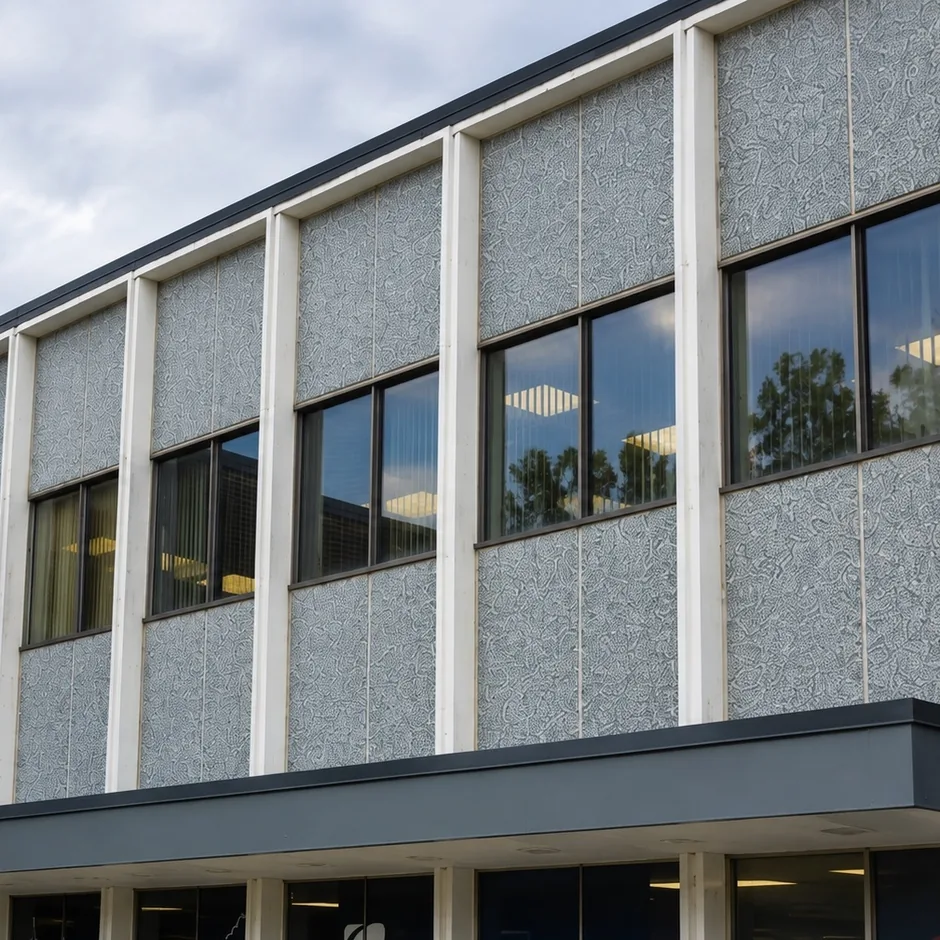
Second-floor office windows in a wall of textured concrete panels and white mullions, with a dark brick wall at the left and a cloudy sky above.
Clear Channel Outdoor’s Chicago office, where AAA Glass Tint installed Ecolux 70 Low-E film on the second-floor windows in 2022.

Winter and summer

Why Low-E window film makes sense for Chicago’s cold winters

Chicago averages about six times as many heating degree days as cooling degree days (5,974 against 1,003 a year, National Weather Service normals for 1991 to 2020), so winter heat loss through the glass matters as much as summer sun. Solar control film answers the summer side. Low-E film insulates the glass against winter heat loss as well, which is why it fits buildings whose windows are cold all winter and hot in July.
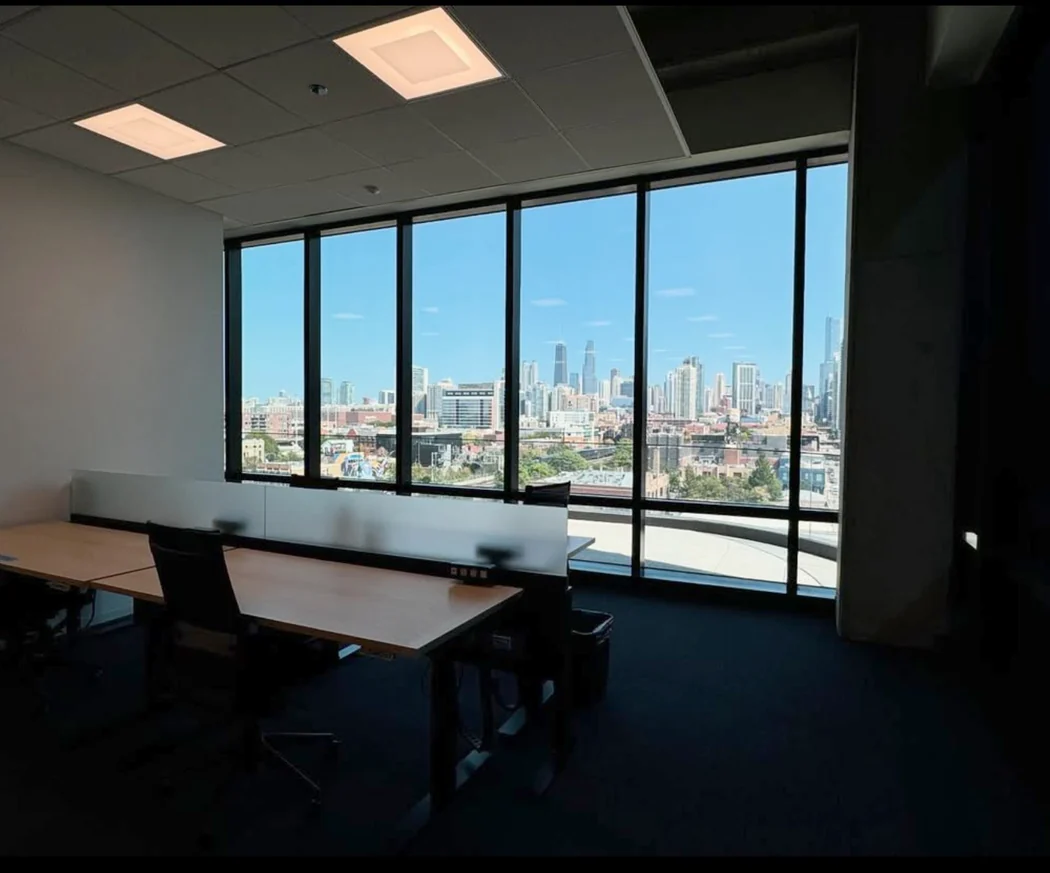
An office with rows of desks and a wall of windows looking out over the Chicago skyline on a clear day.
Low-E film on office glass in Chicago.

Low-E film

  • Reflects room heat back insideOrdinary clear glass has an emissivity of about 0.84, so it absorbs most of the heat radiating from a warm room and gives it up to the outdoors. A Low-E coating reflects that heat back into the room: Solar Gard lists Ecolux 70 at 0.09. That is what makes the film a window insulation film as well as a solar film.
  • Cuts heat loss through single pane glassOn 1/4 inch single pane clear glass, Solar Gard rates Ecolux 70 at a winter U-factor of 0.60, against 1.02 for the same glass without film, and lists the reduction in winter heat loss at 41 percent. That is heat loss through the glass, not a 41 percent cut in a heating bill.
  • Keeps the daylight and the viewEcolux 70 transmits 67 percent of visible light and reflects 13 percent outside on that glass, so the windows do not look mirrored.
  • Helps in summer tooIt rejects 53 percent of total solar energy on the same glass, which reduces heat near the windows in July.
  • Goes on the existing glassFrom inside, in sections, with the building normally occupied. No window replacement.

Low-E film does not

  • Repair a failed window. Fogged insulated units, failed seals, air leaking around the frames or deteriorating frames call for replacement, and we will tell you so.
  • Cure condensation. A room-side Low-E layer keeps more heat in the room, so the glass runs colder in winter and condensation can form at lower indoor humidity. We ask about humidity and the glass before recommending anything.
  • Come with a savings number. We do not promise one. Results depend on the glass, the orientation, the HVAC system and how the building is operated.
  • Suit every glass. An existing Low-E coating, its surface and the glass construction decide which films are approved. That is what the survey is for.
Independent evidence

What a federal study found about Low-E film on single pane glass

The U.S. General Services Administration’s Green Proving Ground program had Lawrence Berkeley National Laboratory test a room-side Low-E film on single pane windows in two federal buildings, then model other climates, Chicago among them. The film was another manufacturer’s, so the findings describe the technology, not any film on this page.

Insulation

The film nearly doubled the insulating performance of the single pane windows: a calculated winter U-factor of 0.574 with the film against 1.025 without. The filmed single pane still transferred more heat than double glazing without a Low-E coating.

Chicago

In the modeled Chicago building, 24 percent less heating and cooling energy in the perimeter zone compared with single pane clear glass, and 22 percent compared with single pane bronze glass. Whole-building savings were estimated at no less than a third of the perimeter figure.

Comfort

Occupants reported improved thermal comfort in both seasons. In winter, the Low-E surface reduced the sensation of radiant heat loss near the windows. Some people who were used to clear glass disliked the tint, so the study advised a trial application first.

Where it fits

The biggest gain and the fastest payback were in buildings with single glazing, or with old applied film near the end of its life. The study also recommended the film for double glazing without a Low-E coating between the panes.

Source: U.S. General Services Administration, Green Proving Ground, GPG-032, Low-E Window Film, February 2017. Modeled and measured results for one film on specific windows; actual performance depends on the building, and AAA Glass Tint does not turn these figures into a savings promise for any building. How much energy does commercial window film save?

The films

Three Low-E films, rated on the same glass

Solar Gard’s film-to-glass guide lists three Low-E films. They trade winter insulation, summer heat rejection and appearance differently, and the glass decides which are approved. Emissivity is how readily the glass surface gives off heat (lower reflects more back into the room); the winter U-factor is how fast heat passes through the glass (lower is better insulation). For comparison, 1/4 inch single pane clear glass without film has an emissivity of about 0.84 and a winter U-factor of 1.02.

FilmEmissivityVisible light transmittedVisible light reflected outsideTotal solar energy rejectedWinter U-factor
Ecolux 700.0967 percent13 percent53 percent0.60
Silver AG 50 Low-E0.3752 percent22 percent56 percent0.77
Silver AG 25 Low-E0.3321 percent45 percent77 percent0.74
Solar Gard’s ratings for each film on the inside of 1/4 inch single pane clear glass, NFRC methodology (data sheets PDF0314ECX70, 0314SILAG50LE and 0314SILAG25LE; the Ecolux 70 Section 08 87 13 specification for total solar energy rejected). Winter U-factor in BTU per hour per square foot per degree Fahrenheit; lower means less heat lost. All three block more than 99 percent of ultraviolet light. Ratings, not measurements on a building; results on other glass differ.

Ecolux 70

The strongest insulator of the three by a wide margin, with the most daylight and the least change to the building’s appearance. It is the Low-E film we have installed on commercial buildings.

Silver AG 50 Low-E

Less winter insulation, more summer heat rejection, and a more reflective look from outside. For buildings where summer heat matters as much as winter heat loss.

Silver AG 25 Low-E

The most summer heat rejection and glare reduction of the three, with a distinctly mirrored look in daylight. For buildings whose appearance standards allow it.

Which one for your building

The glass and the complaint decide. Single pane glass with cold occupants points to Ecolux 70; a west wall that overheats in summer may point to a Silver AG film; an existing Low-E coating may rule some films out. We recommend after the survey, not before.

These are ratings for the film on a given glass, not a prediction of energy savings. What U-factor and emissivity mean

Documented project

Low-E film we have installed

Clear Channel Outdoor’s Chicago office: cold single pane glass in an occupied office, improved without replacing a window.

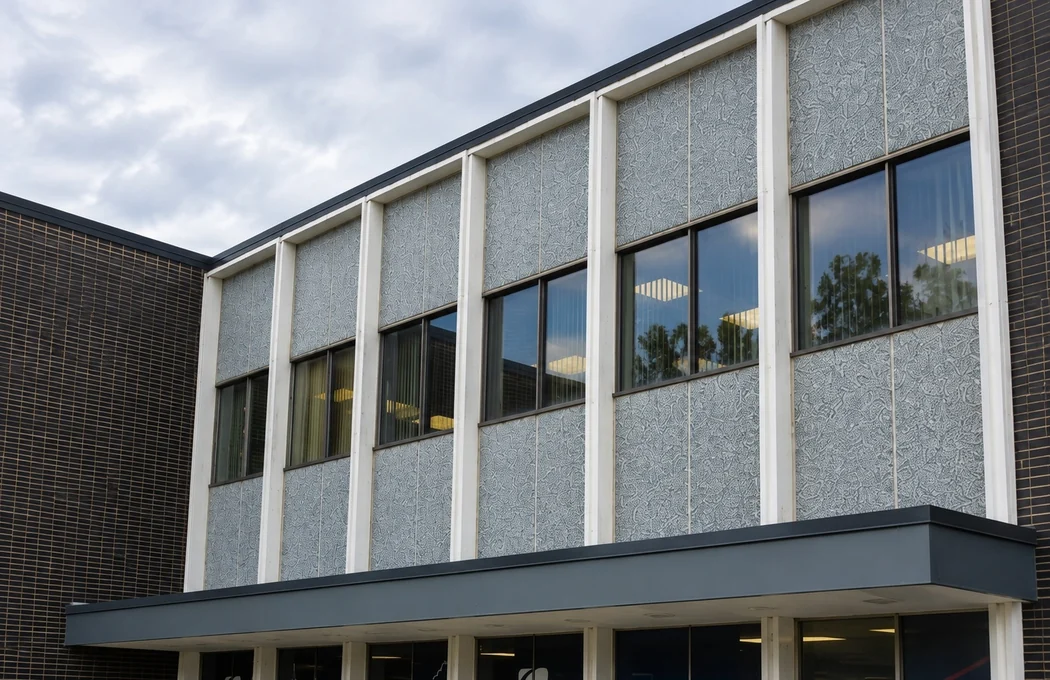
A two-story building front with second-floor windows set in textured concrete panels, a dark canopy below them and storefront glass at street level.
The Clear Channel Outdoor office in Chicago. The second-floor windows received Ecolux 70 on the inside of the glass.

Office · Chicago · 2022

Clear Channel Outdoor, Chicago office

The office windows are 1/4 inch single pane glass, and in winter the glass was cold and staff near the windows felt it. Clear Channel Outdoor wanted the offices more comfortable without replacing the windows.

  • Glass1/4 inch single pane clear glass in occupied office space
  • FilmSolar Gard Ecolux 70 Low-E window film, about 1,200 square feet, applied to the inside of the glass
  • Edge sealDOWSIL 995 silicone around the edge of the film
  • ScheduleInstalled in sections to keep disruption to a minimum
  • ResultAn immediate improvement in heat retention, and positive comments from staff almost right away

Read the Clear Channel Outdoor case study

A downtown Chicago office suite, 2023. Existing window film was removed from 29 panels and Solar Gard Ecolux 70 installed in its place, about 800 square feet. The client is not named.

Cold glass in your building? Request a Commercial Assessment

How a project runs

Every project starts with your glass

  1. 01

    Glass check

    We identify the glass before recommending a film: its thickness and construction, single pane or insulated unit, any existing Low-E coating and the surface it is on, and laminated or tempered glass, read from the glass markings and checked with our Glass-Chek meter on every survey. The glass decides which films Solar Gard’s film-to-glass guide approves. Where the guide requires it, and for every installation over 2,500 square feet, we submit the film-to-glass application and coordinate the documentation; Solar Gard’s technical services evaluates it and issues the approval.

  2. 02

    Samples and appearance

    When appearance matters we put samples on your glass first, and we check any appearance standards from the property manager, the lease or an owners’ association. For benchmarking, green building documentation or a specification, we provide the manufacturer’s data sheets for the film we recommend.

  3. 03

    Scheduled around your building

    Low-E film goes on the inside surface of the glass with a wet application. Crews work through the building in sections, so it can normally stay occupied; after-hours and weekend work is available at additional cost. Old film comes off first; new film never goes over it. While the mounting solution dries the film can look slightly hazy or show small water spots, and cold or overcast weather makes that take longer. Solar Gard asks that new film not be cleaned for 30 days.

  4. 04

    Walkthrough and warranty

    We review the completed work with you. Solar Gard’s limited warranties cover Ecolux 70 for 15 years in commercial use and the Silver AG Low-E films for 7 years, with glass breakage and seal failure coverage on approved film-to-glass applications, subject to the warranty’s terms. Near Lake Michigan we edge seal where Solar Gard calls for it; because some shade types can void the Silver AG warranty, shades are part of the conversation. We register the warranty to the purchasing company and send the warranty document, which carries the terms and exclusions, by email.

What affects the price. The type and quantity of glass, access and height, furniture or equipment near the windows, installation hours, the film selected, and removing any existing film. We do not add a distance surcharge for projects we accept in Illinois. What commercial window film costs

We do not subcontract installation; our own crews do the work. AAA Glass Tint is a commercial window film contractor serving commercial buildings throughout Northern Illinois since 1984. A family-owned company headquartered in Elgin, Illinois, with field crews based in Chicago, Northbrook, Wheaton and Orland Park.

For architects and specifiers. Solar Gard’s Section 08 87 13 specification calls for a film-to-glass stress analysis submittal, a mock-up on larger projects and the IWFA visual acceptance standard. We coordinate those submittals with Solar Gard and supply the data sheets for the film on your glass.

Film manufacturers

Solar Gard authorized dealer for more than 20 years

Panorama authorized dealer

We also work with 3M films

Memberships

IWFA member

BOMA/Chicago Affiliate Member

Questions

Low-E window film questions

Does Low-E window film work in winter?

Yes, on the glass itself. On 1/4 inch single pane clear glass, Solar Gard rates Ecolux 70 at a winter U-factor of 0.60 against 1.02 with no film, and the federal GSA study found a room-side Low-E film nearly doubled the insulating performance of single pane windows. What that saves in a given building depends on the glass, the orientation and the HVAC system.

How much energy will it save?

We do not promise a number, and we do not publish savings percentages for our own projects, because we have no measured before and after utility data to support one. The GSA’s modeled Chicago building saved 24 percent of its perimeter-zone heating and cooling energy with single pane clear glass, and whole-building savings were estimated at no less than a third of that. For your building, a whole-building energy model using the film’s ratings on your glass, or weather-adjusted utility data from before and after, gives a real answer; we supply the ratings.

Should we replace the windows instead?

If the window system is failing, yes: fogged or failed insulated units, air leaking around the frames and deteriorated frames are replacement problems, and film does not fix them. If the windows are sound and the glass is the weak point, Low-E film improves the glass at a fraction of the cost and disruption of replacement. Low-E window film vs. window replacement

Can it go on glass that already has a Low-E coating?

Often, and the survey decides. Solar Gard approves its Low-E films on double pane units with the coating on surface 2; on surface 3 and on triple pane units the approval is limited to tempered or heat strengthened glass, and triple pane Low-E units need written approval. A coating already in the unit also reduces what a film can add. How Low-E coatings affect window film

Will it darken the building or look mirrored?

Ecolux 70 transmits 67 percent of visible light and reflects 13 percent outside on 1/4 inch clear glass, so it changes the look the least. The Silver AG Low-E films are more reflective, and Silver AG 25 Low-E is distinctly mirrored in daylight. When appearance matters we put samples on your glass first.

Does it cause or cure condensation?

It does not cure condensation, and a room-side Low-E layer can raise the risk a little: the glass runs colder in winter, so condensation can form at lower indoor humidity. A 2020 Pennsylvania State University study still found the room-side position the better choice for single pane windows in climate zones 4 through 7, which include Chicago. If condensation is already happening, we want to know why first, and no film can remove moisture trapped inside a failed insulated unit.

Can the building stay open during installation?

Yes. The film goes on the inside of the glass, in sections, and the building can normally stay occupied. It can look slightly hazy while the mounting solution dries, longer in cold weather, and it should not be cleaned for 30 days. After-hours and weekend work is available at additional cost.

Does Low-E film help with Chicago energy benchmarking?

Only indirectly. Chicago’s energy benchmarking ordinance covers buildings over 50,000 square feet and requires reporting and periodic verification, not investment. Low-E film improves the glass’s rated performance, and lower energy use is what moves the reported number. For benchmarking, green building documentation or a specification we provide the manufacturer’s data sheets for the film on your glass.

Is there a ComEd or Nicor Gas incentive?

Not a standard one that we know of. Both utilities have custom incentive programs that pay on calculated savings and require approval before the project starts; work started before approval is not eligible. Ask your utility account manager or energy consultant before signing anything.

Two ways to start

An existing building, or a project on the drawing board

An existing building

Request a free on-site assessment. David Johnson, the owner, or one of our field technicians identifies the glass, checks the frames and seals, puts samples on the glass when appearance matters, and says plainly when film is the wrong answer.

A specification or retrofit project

Request a preliminary budget through the form and mention the project. We will reply with how to send the drawings and the glass schedule, then return the budget, the data sheets for the film on your glass and the submittals the specification calls for.

Request a Preliminary Budget

AAA Glass Tint is a commercial window film contractor serving commercial buildings throughout Northern Illinois since 1984. A family-owned company headquartered in Elgin, Illinois, with field crews based in Chicago, Northbrook, Wheaton and Orland Park.

Or call 815-216-4203, Monday through Friday, 8 AM to 5 PM. We typically respond within one business day.

×