Bird Strike Prevention Window Film for Commercial Buildings

Reduce Bird Collisions While Preserving Natural Light

Bird strike window film puts a visible pattern on commercial glass so birds recognize it as a barrier, while occupants keep their daylight and views. AAA Glass Tint has installed bird collision film on more than 50 projects across the Chicago area, always on the exterior of the glass, using products matched to each building and its specification.

Comparing films for other goals too? Our Window Film Performance Guide explains heat, glare, UV, Low-E and glass compatibility in plain terms.

Why Bird Strikes Are a Commercial Building Problem and What Window Film Does About It

Birds do not see clear or reflective glass as a solid surface. A large facade that reflects sky, trees or open space looks to a bird like a place it can fly through, and collisions can injure or kill birds. For building owners and facility managers, repeated strikes are a recurring problem: dead or injured birds near entrances, marks on the glass, complaints from occupants, and, on some projects, design requirements that call for bird-friendly glazing.

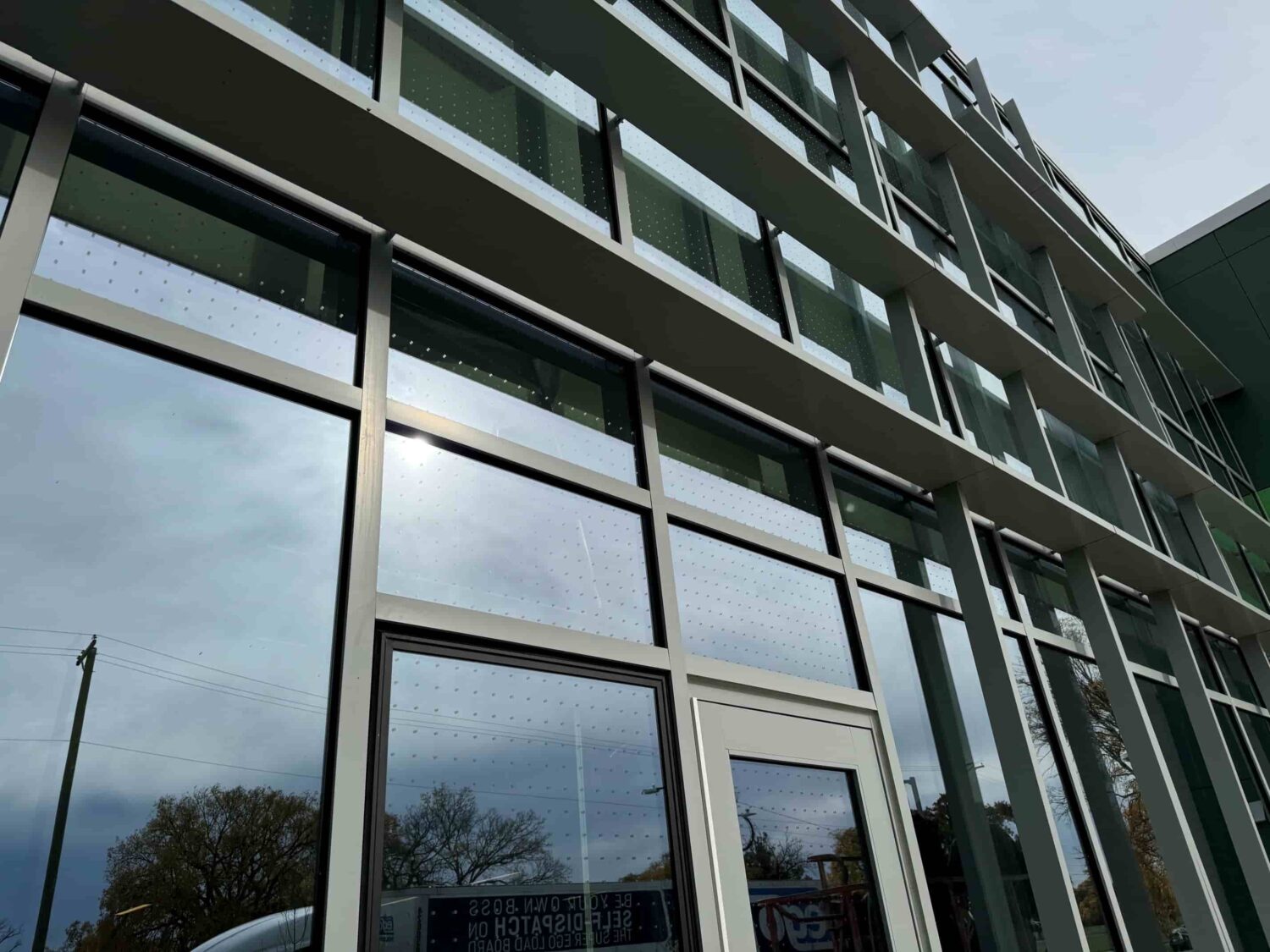
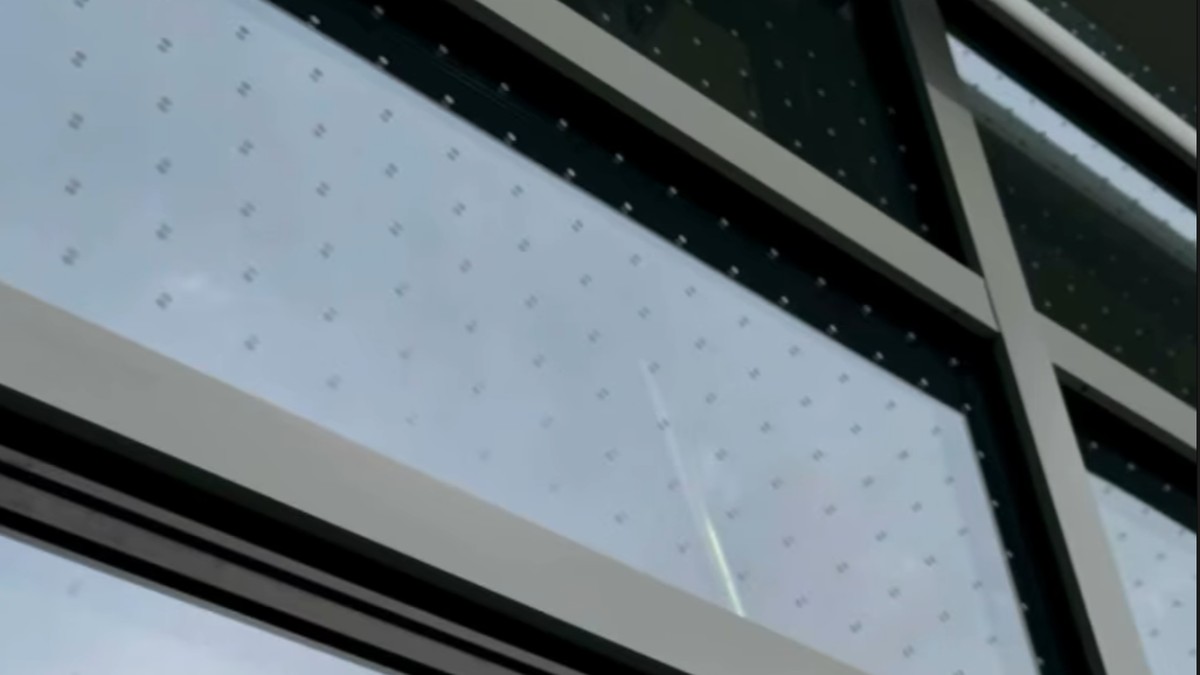
Bird strike film addresses this by adding a pattern of dots or lines to the outside of the glass. The pattern helps birds recognize the glass as a barrier and reduces the likelihood of a collision, while people inside see a subtle pattern and keep most of their light and view. Because it goes on existing glass, film is a practical option where replacing glazing or adding screens is not.

Illinois Buildings Where Bird Strike Film Is Most Commonly Specified

Corporate offices and campuses. Multi-story offices with large facades or curtain walls, especially next to landscaped grounds, retention ponds or wooded areas.

Healthcare facilities and hospitals. Campuses with extensive glass and green space, where bird-friendly design is often part of sustainability goals for new construction and renovation.

Schools, colleges and universities. Buildings with large glass areas, atria and glazed connector bridges. Bird film is often installed alongside other school window film work.

Municipal and public buildings. Libraries, community centers and government facilities with architectural glass, particularly near forest preserves, parks and waterways.

Transportation facilities. Terminal glass and connectors near open land and other high bird-traffic areas.

Retail storefronts. Ground-floor glass that reflects street trees and landscaping, especially along suburban corridors with mature tree canopy.

Bird strike film also supports sustainability and campus environmental goals. Illinois requires bird-safe design on new and substantially renovated state buildings, and Chicago is considering an ordinance that would extend bird-friendly glazing requirements to private construction and renovation. We explain both below.

Commercial Project Process

How a Commercial Window Film Project Works

Every bird strike film project follows the same four steps, from the first look at the glass to the final walkthrough.

01

Glazing Inspection

We look at the existing glass and frames, where collisions are happening, the surrounding landscape, access for exterior work, and any specification the project must meet.

02

Recommended Film Type

We recommend a product and pattern for the glass and the goal, with samples or a mockup where appearance matters. Need solar, security or decorative film too? We plan it together.

03

Installation Coordination

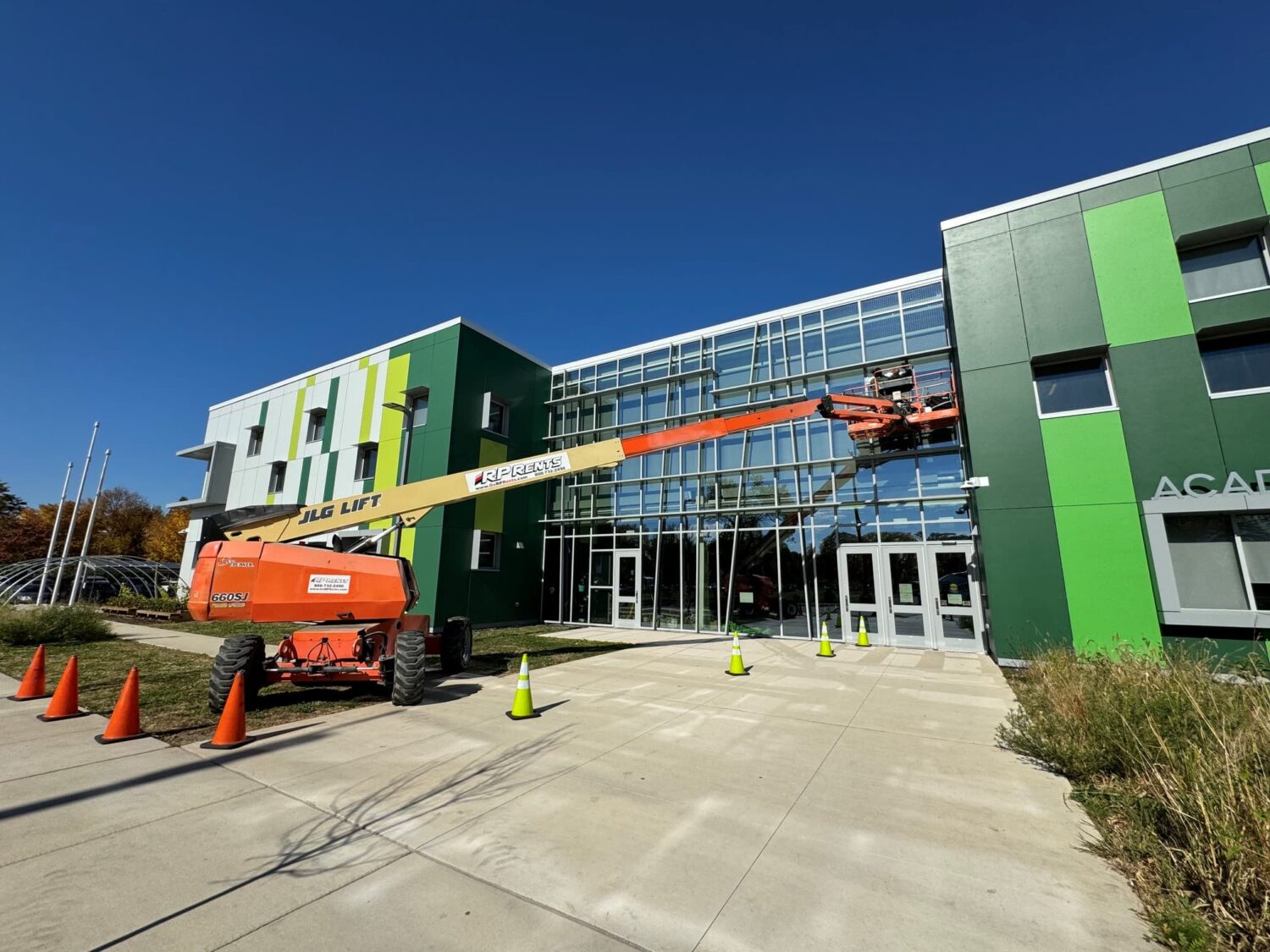
We schedule the exterior work and lift access around occupied offices, schools, healthcare facilities and storefronts, and coordinate with building management.

04

Completed Retrofit

We walk the finished work with you and provide the manufacturer warranty information for the product installed.

How Bird Strike Window Film Works: Pattern, Visibility, and Installation

Pattern. Bird strike film works by placing a repeating pattern of dots or lines on the glass at a density birds read as a barrier rather than an open flight path. We select the product, pattern and coverage for each building based on the glass, the facade orientation, the surrounding landscape and the project’s specification.

Which standard applies? It depends on the project:

  • American Bird Conservancy criteria. Many bird-friendly specifications reference the American Bird Conservancy’s ratings for bird-friendly materials and its criteria for pattern spacing. Architects often name these directly.
  • Illinois state buildings. Illinois law (Public Act 102-0119) requires bird-safe design on new and substantially renovated buildings managed by the state’s Department of Central Management Services. It applies to state buildings only. Qualifying methods include patterns with horizontal gaps under 2 inches high and vertical gaps under 4 inches wide.
  • Chicago’s proposed ordinance. Chicago is considering an ordinance that would require bird-friendly glazing on new construction and on many renovations, and that names exterior-applied films meeting American Bird Conservancy criteria as one qualifying method. It has not been adopted. We cover what it would require, and where it stands, in Chicago’s Proposed Bird-Friendly Building Ordinance: What It Would Require.

On projects with a written specification, we confirm the exact product and pattern against it and provide product data, warranty information and samples or mockups for approval.

Visibility. Patterns range from subtle dot designs to more visible lines, frosted stripes or etched looks, which can add privacy or decorative value. Where appearance matters, we show samples on the actual glass before anything is approved.

Exterior application. The bird collision products we install, including Solar Gard WingSafe, Feather Friendly markers and SOLYX bird film, are applied to the exterior surface of the glass, where birds see the pattern before they choose a flight path. We use commercial lifts and other access equipment as the building requires. Manufacturer warranties vary by product, so we provide the current warranty document for the specific product proposed.

No glass replacement. Bird strike film can be applied to many existing commercial glazing systems without replacing the glass or making structural changes.

Combined programs. Bird strike film can be part of a broader window film program that may include solar control, privacy, security and decorative film on the same building. Multi-application projects are common in healthcare, educational and institutional buildings where different glazing areas have different performance requirements.

Visit our commercial window film FAQ for answers to common questions.
AAA Glass Tint installs bird strike film on commercial and institutional buildings throughout the Chicago metropolitan area and Northern Illinois, with select projects in Northwest Indiana, Southern Wisconsin and Southeast Michigan. Every project begins with a site assessment of the glass type, facade orientation, surrounding landscape and pattern requirements before any film is specified or scheduled.

Our crews are experienced with the access and coordination requirements of occupied commercial and institutional buildings. We schedule bird strike film installation around building operations and coordinate exterior access with facility management. We do not subcontract our work. Every installation is performed by our own trained crews.

Commercial Window Film Installed by Certified Experts

Request a Commercial Estimate

×