
Bird Safety
Bird Collision Window Film for Existing Buildings
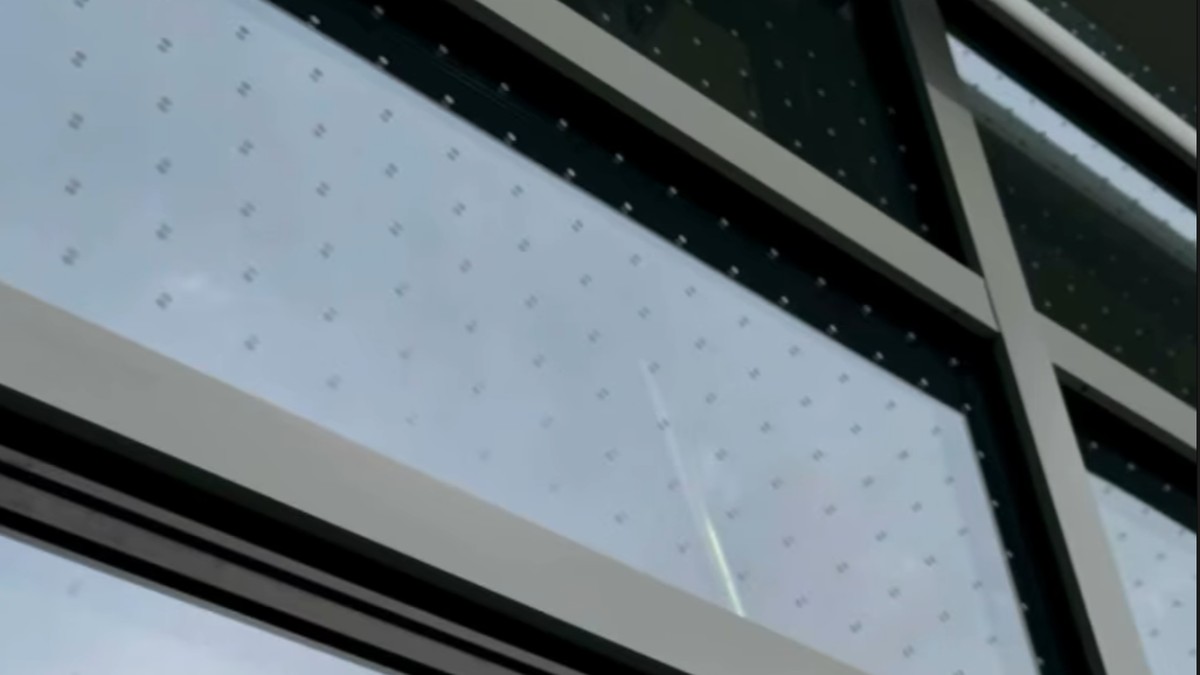
Treat the outside of the glass where birds are hitting. On an existing building that usually means exterior bird film or markers on the hazard areas, with a pattern spaced no more than 2 inches apart or an American Bird Conservancy threat factor of 30 or less. Interior patterns sit behind the reflection birds react to.
How do you stop birds from hitting the windows of an existing building?
Treat the outside of the glass where the collisions happen. On an existing building, that usually means applying an exterior film or marker system to the hazard areas, the glass that reflects trees and sky or that birds can see straight through, rather than replacing the glass. The pattern has to go on the outside surface, and it has to meet one of two tests: dense enough spacing (the U.S. Fish and Wildlife Service’s 2 by 2 inch guidance), or a tested American Bird Conservancy threat factor of 30 or less.
No current rule in Illinois requires an existing building to add bird protection unless it is being renovated, so most retrofits on existing buildings are voluntary. They usually start because birds are already hitting the glass.
Key points
- A 2014 peer-reviewed study estimated that building collisions kill 365 million to 988 million birds a year in the United States. About 56 percent of those deaths were at low-rise buildings and less than 1 percent at high-rises.
- The U.S. Fish and Wildlife Service recommends patterns at least 1/4 inch across, no more than 2 inches apart, in a 2 by 2 inch grid.
- The American Bird Conservancy (ABC) rates materials by threat factor in flight tunnel tests and considers 30 or less bird-friendly.
- A tested product can qualify without following the 2 by 2 spacing. Solar Gard WingSafe Black Dot has dots about 2.6 inches apart and an ABC threat factor of 4.
- Bird film for collisions goes on the exterior. ABC’s product guide says products must be on the outside of the window to work, with one named exception for single pane glass.
- Lake County, Illinois state buildings and Chicago’s proposed ordinance all apply to new construction or renovation, not to existing buildings that are left as they are.
Why do birds hit glass?
Because they cannot see it as a barrier. The U.S. Fish and Wildlife Service explains that birds do not treat glass as something to avoid, and that they are drawn toward reflections of what looks like habitat: trees, landscaping and sky. Clear glass they can see through, such as a glass corner, a walkway or two windows lined up across a room, looks like an open path. Lights shining out from the interior can also draw birds in at night.
Building height is not the main driver. In the 2014 study by Loss, Will, Loss and Marra in The Condor, low-rise buildings accounted for about 56 percent of the estimated deaths, homes for about 44 percent and high-rises for less than 1 percent. A one or two story school, office or clinic with glass facing trees is exactly the kind of building where collisions add up.
Where on a building do collisions usually happen?
At the glass that combines reflection or see-through views with nearby bird activity. The places to look first:
- Glass that reflects trees, landscaping or open sky
- Glass corners, skywalks and building connectors where birds can see through to the other side
- Glass next to courtyards, green roofs and roof terraces
- Large uninterrupted panes, such as entrance walls, atriums and stairwells
Chicago’s proposed ordinance lists the same kinds of high-risk features: skyways and skywalks, building connectors, exterior corners where a bird may see a fly-through, interior corners, glazing next to courtyards, atria, and the first three floors of glazing next to a green roof, amenity deck or roof terrace. On an existing building, the most useful evidence is local: where staff find birds, and where marks show on the glass. Those panes are where treatment starts.
What is the 2 by 2 rule?
It is spacing guidance for patterns on glass. The U.S. Fish and Wildlife Service says patterns should be at least 1/4 inch in diameter and no more than 2 inches apart, and that spacing them in a 2 by 2 inch grid is especially important for small birds such as hummingbirds. ABC’s guidance for homeowners uses the same numbers: dots no smaller than 1/4 inch, spaced 2 inches apart horizontally and vertically.
Older guidance and some rules use wider spacing. Illinois law for state buildings, for example, accepts patterns with horizontal gaps under 2 inches high and vertical gaps under 4 inches wide. That difference is one reason a pattern should be checked against the rule that actually applies to the building, not against a general number.
What is an American Bird Conservancy threat factor?
It is a tested rating of how well birds avoid a material. ABC releases wild birds into a flight tunnel that offers two exits: plain glass and the material being tested. The threat factor is the percentage of birds that flew toward the tested material, from at least 80 trials. Lower is better. ABC defines bird-friendly materials as a threat factor of 30 or less, which it relates to an estimated collision reduction of at least 50 percent in real conditions.
A tested rating is a second way to qualify, separate from spacing. Solar Gard’s WingSafe Black Dot uses 11 millimeter dots 65 millimeters apart, about 2.6 inches, which is wider than 2 by 2. Solar Gard reports an ABC threat factor of 4 for it on clear glass, well inside ABC’s bird-friendly range. Both routes are recognized, but the governing rule decides which one counts on a given project:
| Rule | Applies to | Glass covered | Tested rating accepted | Existing buildings |
|---|---|---|---|---|
| Illinois, 20 ILCS 405/405-317 (Public Act 102-0119) | State buildings managed by Central Management Services: new construction, acquisitions, and renovations altering more than 50 percent of the facade | 90 percent of exposed facade material up to 40 feet, 60 percent above | Lists methods, including patterns with horizontal gaps under 2 inches high and vertical gaps under 4 inches wide | Not required unless renovated as above |
| Lake County, unincorporated areas | New non-residential and residential buildings, and non-residential renovations and additions involving glass | At least 80 percent of the glass on each facade, ground to 100 feet | Threat factor 30 or less, among other options | Not required; retrofit treatments allowed |
| Chicago, proposed ordinance O2026-0024083 (not adopted) | New construction and renovations replacing 25 percent or more of the glazing, as introduced | All glazing from ground level to 100 feet | Threat factor 25 or less, or exterior-applied patterns meeting ABC criteria | No general retrofit requirement as introduced |
As of October 12, 2026, the City Clerk’s record shows Chicago’s ordinance in the Committee on Zoning, Landmarks and Building Standards, with no hearing or vote recorded. We explain it in Chicago’s Proposed Bird-Friendly Building Ordinance.
Does bird film go on the inside or the outside of the glass?
The outside. A pattern on the inside of the glass sits behind the reflection on the outer surface, so a bird approaching the glass sees the reflected trees and sky, not the pattern. ABC’s guide to collision products states that they must be placed on the outside of the window to be effective, with a single exception it names for the inside of single pane plate glass. Solar Gard’s WingSafe instructions say the same: the film must go on the exterior for birds to recognize the pattern.
Exterior placement changes the job. The film or markers are made to withstand weather, the crew works from outside the building, and taller glass means lifts. In Northern Illinois, exterior installation is generally not practical in winter, so most bird film work is scheduled for warmer months, and each product has its own installation and care requirements.
Which bird collision products work on existing glass?
Products made for exterior application and backed by spacing or testing. AAA Glass Tint installs Solar Gard WingSafe, Feather Friendly surface-applied markers and SOLYX bird film, matched to the project’s specification. They differ in appearance, pattern, warranty and how they are applied, so the right one depends on the building, the rule that applies, if any, and how visible the owner wants the pattern to be.
As an example of what to look for on a data sheet, Solar Gard publishes these figures for WingSafe Black Dot:
- Pattern: 11 millimeter black dots, 65 millimeters apart in a grid
- ABC threat factor: 4, on clear glass
- Visible light transmitted: 81 percent on 6 millimeter clear double glazing
- Warranty: 10 year product warranty on vertical surfaces
Ask for the same information on any product you are offered: the pattern and spacing, the ABC threat factor if it has been tested, the light transmission on named glass, and the current warranty document. Warranty terms vary by product, so one number does not cover every bird film.
Do you have to treat the whole building?
Not usually, on an existing building. Retrofits are most often scoped to the hazard areas: the facades, corners, walkways and entrances where birds are actually hitting. The scope comes from where collisions occur, the shape of the facade and any architect’s or owner’s specification. Solar Gard notes that untreated glass can still cause collisions, so the boundary of the treated area is worth deciding deliberately, especially on glass next to the areas being treated.
New construction is different when a rule applies. Lake County requires at least 80 percent of each facade up to 100 feet, and Chicago’s proposed ordinance would cover all glazing in that zone.
What does a bird film retrofit look like in practice?
At a multi-story Chicago school in 2024, birds were striking large glass walls that reflected the sky and surrounding trees. AAA Glass Tint installed Solar Gard byDESIGN Modern Bird Strike film in a dot pattern on the exterior of about 2,100 square feet of glass, working from a boom lift during school hours in areas without students. Solar Gard lists that film at 88 percent visible light transmission on 1/4 inch clear glass, against 89 percent without film, and the school reported a significant reduction in bird strikes. The full project is in our Chicago school bird strike case study.
The same products also go on new buildings. At Red Apple School in Racine, Wisconsin, the architects specified WingSafe Black Dot for the top four rows of a curved glass wall, and our crew installed 204 panels from an 85 foot boom lift. See the Red Apple School case study.
What does bird collision film cost?
It depends on the square footage, the product, how the glass is reached and how much of the building is treated. Access is often the largest variable: ground floor glass can be done from ladders, while upper floors and curved or angled walls need lifts. We give broad project ranges and the factors that move price in What Commercial Window Film Costs.
What should you ask before choosing bird film for an existing building?
You do not need a code requirement to act. If birds are hitting your glass, treating the panes where the strikes happen is usually the most practical place to start.
Ask where the collisions are happening and whether the proposed scope covers those panes. Ask whether the product goes on the exterior, what its pattern spacing is, and whether it has an ABC threat factor. If a rule applies, such as a renovation in unincorporated Lake County, ask which qualifying route the product uses. Ask how the crew will reach the glass, when the weather allows the installation, and for the current warranty document for the exact product. AAA Glass Tint has completed more than 50 bird film projects. Request a free assessment.
Sources
- Loss, S. R., T. Will, S. S. Loss and P. P. Marra, Bird-building collisions in the United States: Estimates of annual mortality and species vulnerability, The Condor: Ornithological Applications 116:8 to 23, 2014.
- U.S. Fish and Wildlife Service, Threats to Birds: Collisions, Buildings and Glass, updated December 3, 2024.
- American Bird Conservancy, Testing and Research (threat factor and flight tunnel testing), reviewed October 2026.
- American Bird Conservancy, guide to bird collision products for windows, file dated November 2023.
- Illinois General Assembly, Public Act 102-0119, 20 ILCS 405/405-317, Bird-safe State buildings, effective January 1, 2022.
- Lake County, Illinois, Bird-Friendly Design Requirements and Bird-Friendly Building Design, reviewed October 2026.
- City of Chicago, Office of the City Clerk, Ordinance O2026-0024083, Bird-Friendly Building Design, record reviewed October 12, 2026.
- Solar Gard, WingSafe Black Dot and White Dot technical sheet, SKEX0141A4WSINT 02/26.
- Solar Gard, WingSafe Bird Protection Film FAQ, SK0168WSBPFFAQ.
- Solar Gard, byDESIGN Modern Bird Strike film data sheet, SK0314BDMBS 4/21.
Related resources
Bird Safety
Chicago’s Proposed Bird-Friendly Building Ordinance: What It Would Require
What Chicago's proposed bird-friendly building ordinance would require, which projects and buildings it covers, and where exterior film fits.
Read Article: Chicago’s Proposed Bird-Friendly Building Ordinance: What It Would Require
Talk to a commercial window film contractor
AAA Glass Tint has served the commercial window film market since 1984. We assess the glass, the frames and the openings before recommending anything, and we install our own work.