
Security and Safety
Security Film Attachment Systems Explained
A security film attachment system connects the filmed glass to the frame, usually with a structural silicone bead or mechanical profiles, so the broken glass stays connected to the opening. Without it, film is a glass safety product, not intrusion delay. Blast testing on the same film and glass showed better results with an attachment than without.
What is a security film attachment system?
An attachment system connects security film on the glass to the frame around it, so the filmed glass stays connected to the opening after it breaks. Film on the glass alone holds broken glass together and improves glass safety. The attachment ties the filmed glass back to the frame and is critical when the goal is intrusion delay.
AAA Glass Tint does not treat film without an attachment as a security system. When the goal is intrusion delay, the attachment is part of the specification, not an upgrade.
Key points
- Film alone holds broken glass together. The attachment keeps the filmed glass connected to the frame, which is what intrusion delay depends on.
- Solar Gard describes four installation methods: daylight, wet glaze, flexible and mechanical.
- In a 2000 test series, 8 mil film on 1/4 inch annealed glass moved from GSA Condition 3b as a daylight application to 3a with a four sided mechanical or wet glaze attachment.
- AAA Glass Tint’s standard attachment is a wet glaze with DOWSIL 995 structural silicone.
- Dow lists DOWSIL 995 curing at 7 to 14 days and full adhesion at 14 to 21 days, at 77 degrees Fahrenheit and 50 percent relative humidity.
- If the frame cannot take an attachment, the work is glass safety and fragment retention, not a security installation.
What are the main types of attachment?
Solar Gard’s blast testing summary describes four approaches to installing safety and security film:
| Method | How it connects | Notes |
|---|---|---|
| Daylight | Film on the glass only, with a small gap to the frame; no anchoring | Retains fragments; not a security attachment |
| Wet glaze | Structural silicone bead along the perimeter, bonding the film to the frame | AAA Glass Tint’s preferred and standard method |
| Flexible | A membrane and high bonding tape connecting film to frame | Another attachment approach used in certain system designs |
| Mechanical | Metal profiles fastened to the frame, capturing the film | Metal profile attachment used in specific engineered systems |
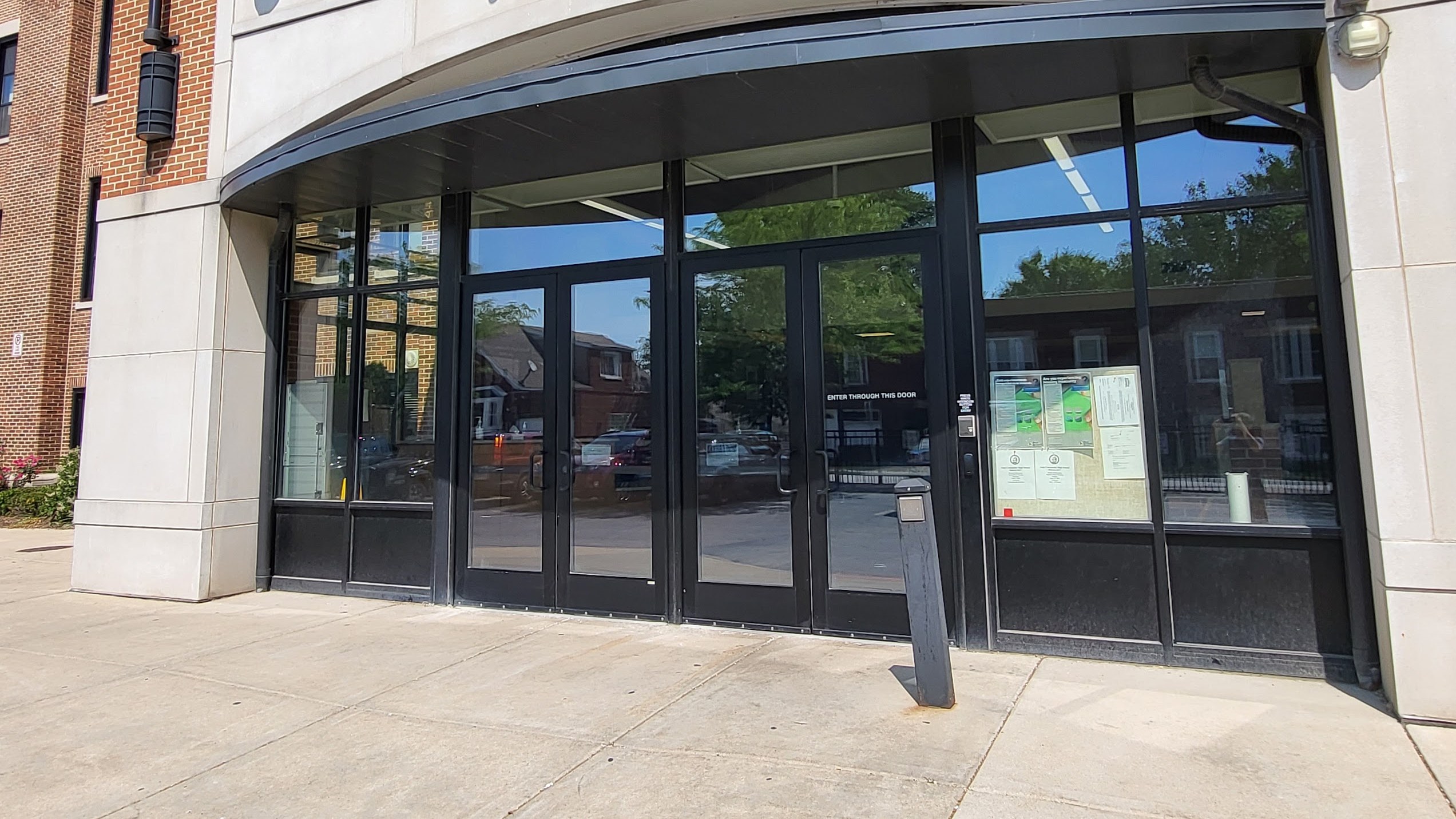
The International Window Film Association describes daylight installation as the most widely used method, sufficient in most cases to hold broken annealed glass in the frame under human impact. On tempered glass, which breaks into small pieces, IWFA states that a more robust method is needed to keep the glass from falling out of the frame. In the Illinois school entrances we commonly work on, the doors and sidelights are usually tempered safety glass, which is why the attachment matters so much in those openings.
Does the attachment change how the glass performs?
Yes, and blast testing shows it with the same film on the same glass. In a test series run by Applied Research Associates in 2000, in cooperation with the Defense Threat Reduction Agency, 8 mil two ply film on quarter inch annealed glass performed to GSA Performance Condition 3b as a daylight application. The same film on the same glass performed to Condition 3a with a four sided mechanical attachment, and to 3a again with a four sided wet glaze using Dow Corning 995 structural silicone.
IWFA’s summary of blast testing reaches the same conclusion: methods of film attachment, mechanical or otherwise, provide better protection than daylight installed film. Those results describe the tested configurations, not every building. The frame, the glass, the opening size and the installation all change the outcome, which we cover in What Security Window Film Can and Cannot Do.
Why does AAA Glass Tint use wet glaze with DOWSIL 995?
Wet glaze with DOWSIL 995 structural silicone is our preferred and standard attachment method. The finished system is a continuous structural silicone bead around the perimeter, bonding the filmed glass to the frame. DOWSIL 995 is a structural silicone sealant, the same Dow Corning 995 used in the wet glazed specimens of the 2000 test series described above.
Wet glaze is the default unless the opening or the project gives a reason to use something else. Frame configuration, the usable bonding surface, appearance requirements and the specified security system can all affect that choice. We do not choose the attachment independently of the existing glass and frame.
Two of our projects show the system at scale. For a Northern Illinois school district, every one of 1,205 panels of 8 mil film across nine buildings was attached with DOWSIL 995; see our school district security film case study. For a government agency, 14 mil film was attached on all four sides of 136 panels; see our government agency security film case study.
How much of the film has to bond to the frame?
The attachment has to meet the dimensions required by the specified security film system. The necessary overlap and bead size depend on the application and manufacturer requirements. Solar Gard’s 08 87 23 guide specification, for example, calls for at least 1/2 inch of overlap on film and frame, not counting the glazing stops, or 3/8 inch of depth at the center of the bead for blast mitigation, and at least 3/8 inch of overlap or 1/4 inch of depth for impact resistance or glass retention. Those dimensions belong in the written specification; we explain how in How to Write a Commercial Window Film Specification. That is why the frame must provide enough sound, usable surface for the attachment. If it does not, the opening may not be suitable for the intended security system.
What frame conditions prevent a proper attachment?
The frame has to give the silicone a sound surface to bond to. Conditions that get in the way include:
- Deteriorated glazing components
- Damaged or loose glazing stops
- Too little usable frame surface
- Unusual frame geometry
- Any existing condition that prevents a proper structural silicone bond
When the glass or frame cannot support the attachment properly, AAA Glass Tint does not represent the work as a security installation. What can still be provided is glass safety and fragment retention, and the customer should hear that plainly.
What does a wet glaze attachment look like?
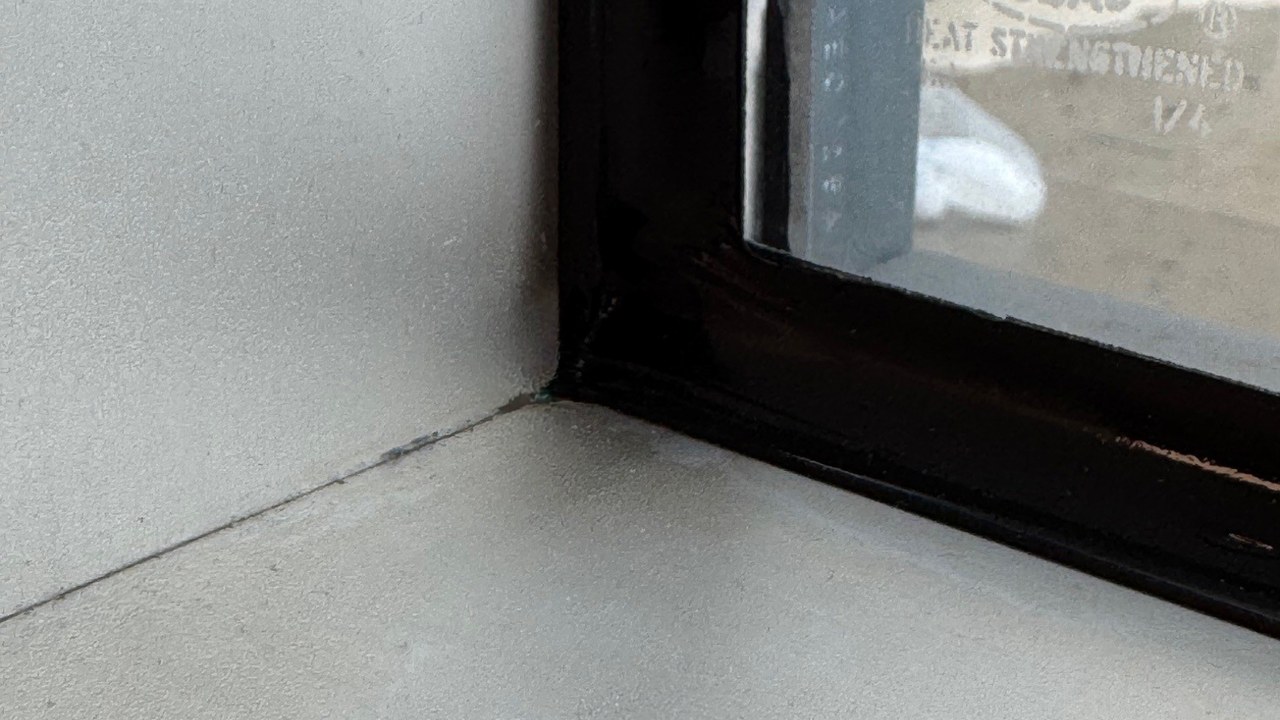
A continuous bead of structural silicone around the edge of the glass, connecting the filmed glass to the frame. We use black or white DOWSIL 995 depending on the frame and the look of the opening. The attachment is visible, especially on doors and storefront framing, so we talk through the appearance with the customer before installation.
Are doors different from fixed glass?
Yes. Doors move, and that takes more attention. The attachment still has to be continuous around the glass, but door hardware, glazing stops, clearances, closers and repeated opening and closing all have to be considered. Sidelights are generally more straightforward because the framing does not move.
How long until the attachment reaches full strength?
Longer than the installation. Dow’s data sheet for DOWSIL 995 lists a tack free time of about 65 minutes, curing time of 7 to 14 days and full adhesion at 14 to 21 days, measured at 77 degrees Fahrenheit and 50 percent relative humidity, and notes that temperature and humidity affect the cure. A newly installed attachment is not at full strength the day the work is finished, which is worth knowing when scheduling around occupied buildings. We cover what occupants should expect while it cures in Can Window Film Be Installed While a Building Is Occupied?
What happens if the glass breaks later?
The attachment comes out with it. Because the film is physically connected to the frame, replacing the glass means removing the old film and structural silicone, preparing the opening again, and installing new film and a new attachment on the replacement glass. It is more involved than removing ordinary window film, and it should be planned as part of any glass replacement.
Can a poor attachment be repaired?
Usually not in any practical way. When a security film installation has been done incorrectly, the system typically has to be removed completely and reinstalled. In our work that is done by our own crews; we do not subcontract installation.
What should facility staff know after installation?
Treat the attachment as part of the security system:
- Do not cut it, pick at it or paint over it
- Do not recaulk it with a different sealant
- Do not modify the frame without considering the attachment
- If the bead is damaged or separating, or anything around the opening changes, including glass replacement or frame work, have the system inspected
What should you ask about the attachment in a bid?
Ask what type of attachment is included, which sealant or hardware is used, whether the frame was inspected for a sound bonding surface, and how the attachment will be handled on doors. If a security film bid does not describe the attachment at all, ask whether there is one. We cover the rest of bid comparison in How to Compare Commercial Window Film Bids, school entrances specifically in Security Film, Laminated Glass or Polycarbonate for School Entrances, and how 3M, Madico and Solar Gard warrant security film and attachment systems in What Does a Commercial Window Film Warranty Cover? To have your frames checked for a sound bonding surface, request a free assessment.
Sources
- Solar Gard, GSA Blast Testing Summary.
- Applied Research Associates, blast test series conducted for MSC Specialty Films in cooperation with the Defense Threat Reduction Agency, February 15 to March 3, 2000. Solar Gard makes this report available through its Armorcoat blast mitigation resources.
- International Window Film Association, Safety and Security Education Guide, revised October 1, 2025.
- Dow, DOWSIL 995 Silicone Structural Sealant Technical Data Sheet, Form No. 62-1260-01-0720 S2D.
Related resources
Security and Safety
What Is Anti-Graffiti Window Film, and When Is It Worth It?
What anti-graffiti window film protects against, how sacrificial film is replaced, how 3M and Solar Gard films and warranties compare, and why it is not security film.
Read Article: What Is Anti-Graffiti Window Film, and When Is It Worth It?
Security and Safety
ASTM F3561 and Security Window Film: What the Standard Tests
What ASTM F3561 tests, why it does not rate retrofit window film, the current edition, and what to ask when a specification or bid cites it.
Read Article: ASTM F3561 and Security Window Film: What the Standard Tests
Security and Safety
Smash-and-Grab Protection for Storefronts and Video Gaming Locations
What security window film can and cannot do against smash-and-grab break-ins at storefronts and Illinois video gaming locations, and how the attachment changes it.
Read Article: Smash-and-Grab Protection for Storefronts and Video Gaming Locations
Talk to a commercial window film contractor
AAA Glass Tint has served the commercial window film market since 1984. We assess the glass, the frames and the openings before recommending anything, and we install our own work.