
Security and Safety
What Security Window Film Can and Cannot Do
Security window film holds broken glass together so an opening takes longer to create. It does not make glass unbreakable, it does not strengthen the frame or door hardware, and it is not bulletproof. What it buys is delay, and how the system performs depends on the complete glazing assembly, especially the attachment, existing glass, frame and opening, not on film thickness alone.
What does security window film actually do?
A sheet of security film is bonded to the interior face of the glass with an adhesive built to hold broken glass to the film rather than just hold the film to the glass. That distinction matters. The adhesives used in standard architectural film are designed to keep the film attached to the glass surface. Safety film adhesives are designed to keep the glass attached to the film after the glass has already failed.
The result is that the pane still breaks. What changes is what the broken pane does next. Many common untreated glazing systems can create an opening quickly once the glass is broken, particularly tempered entrance glass, which fractures into small pieces that can fall away from the opening. Security film changes what happens after breakage by helping the fractured glass hold together, so anyone trying to get through has to keep working against a laminated sheet instead of stepping through an opening.
Blast testing shows this clearly because it includes an unfilmed control. In a test series run by Applied Research Associates in 2000, in cooperation with the Defense Threat Reduction Agency, a quarter inch annealed pane with no film subjected to roughly 4.3 psi performed to GSA Performance Condition 5, the worst rating on the scale, meaning the glazing cracked and the window system failed catastrophically. Identical panes carrying 4 mil, 7 mil and 8 mil film in a standard daylight application all performed to Condition 3b instead.
Everything else in this article is a qualification of that one result.
What does security window film not do?
It does not make glass unbreakable. It does not strengthen the frame, the anchors, the glazing stops or the door hardware. It does not stop a determined attacker who has time and tools. And it is not bulletproof.
The honest way to describe the product is as a delay. Not a barrier, not a denial, a delay. Every decision about which film and which attachment system to use is really a decision about how much delay is worth buying for a particular opening.
That framing also sets the limit of what a contractor should be willing to promise. Nobody can responsibly tell a school district that a given film buys a specific number of minutes on their doors, because the outcome depends on the glass type and thickness, the frame, the glass bite, the size of the opening, the attachment system, the tools used and the method of attack. What a contractor can do is name the tested configurations, explain what those tests measured, and be straight about the difference between a test and a building.
Why does the attachment system matter so much?
Film applied to the glass surface alone, with a small gap between the film edge and the frame, is called a daylight application. The International Window Film Association describes this as the most widely used method, and notes that it is generally sufficient to hold broken annealed glass in the frame under human impact, small missile impact and small explosive charges. IWFA also states that it provides sufficient resistance to attempted forced entry in most cases, unless the attack is more than smash and grab in nature.
That last clause is the whole point. Smash and grab is one threat. Sustained forced entry is another.
An attachment system connects the film structurally to the frame around the perimeter, so the load path does not stop at the edge of the glass. Solar Gard’s specification defines four approaches: daylight with no anchoring, wet glaze using structural silicone along the perimeter, flexible systems using a membrane and high bonding tape, and mechanical systems using metal profiles and fasteners. Mechanical systems are typically used above roughly 8 psi.
The measured difference is large. In the 2000 test series, 8 mil two ply film on quarter inch annealed glass performed to Condition 3b as a daylight application. The same film on the same glass performed to Condition 3a with four sided mechanical attachment, and to 3a again with a four sided wet glaze using Dow Corning 995 structural silicone. In those tested configurations, adding the attachment improved the measured result from Condition 3b to Condition 3a.
IWFA’s own summary of blast testing reaches the same conclusion: methods of film attachment, mechanical or otherwise, provide better protection than daylight installed film applications.
This is why the useful distinction is not between thin film and thick film. A daylight application does a real job: it retains fragments and reduces injury from broken glass, and as IWFA notes it handles most forced entry short of a sustained attack. But AAA Glass Tint does not represent a daylight only installation as a sustained forced entry security system. Where that is the requirement, we specify an appropriate attachment system.
That distinction matters when comparing bids. Two quotes can both say security film and describe different scopes of work. Ask what is being attached, and how.
Do the blast ratings transfer to my building?
No. Two Solar Gard tests show why a rating cannot be transferred from a film name alone. The assemblies sound similar on paper and produced different results.
In the 2000 Applied Research Associates series, 8 mil two ply film on quarter inch annealed glass, wet glazed with Dow Corning 995, performed to GSA Performance Condition 3a.
In a 2010 full scale arena test conducted by Architectural Testing, Inc. under GSA TS01-2003, 8 mil film on quarter inch annealed glass, wet glazed, performed to Condition 3b.
Same nominal film thickness. Same glass type. Same category of attachment. Different result. The reason is in the details, and the details are not small.
| Variable | 2000 ARA test | 2010 ATI test |
|---|---|---|
| Film | 8 mil, two ply | 8 mil |
| Glass | 1/4 inch annealed | 1/4 inch annealed |
| Sealant | Dow Corning 995 | GE SCS2000 SilPruf |
| Bead | 1/2 inch film to 1/2 inch frame, chamfered | 3/4 inch by 3/4 inch |
| Pane size | 46 by 64 inches | 44 3/4 by 62 3/4 inches |
| Glass bite | Not stated in summary | 3/8 inch |
| Charge | 600 lb ANFO, standoff varied | 400 lb ANFO at 159 feet |
| Result | Performance Condition 3a | Performance Condition 3b |
Neither report contradicts the other. They tested different assemblies a decade apart and got different answers, which is exactly what should happen. A Performance Condition describes a tested configuration, not a product. Any contractor, manufacturer or specifier who quotes a rating without naming the test behind it is telling you less than they appear to be.
The 2010 report makes the same point in a second way. Within that single test, 8 mil wet glazed film performed to Condition 2 on double pane annealed glass and to Condition 2 on single pane tempered glass, while the identical film on single pane annealed reached only 3b. The glass changed, the rating changed.
Two specimens in that test are worth describing directly. On single pane tempered glass with 8 mil wet glazed film, the report records no tears and no pullout, with the glazing fully retained in the frame. On single pane tempered glass with 7 mil wet glazed film, the report records significant tears and pullout, and a fragment that reached the vertical witness panel. One mil of difference, same attachment, same blast, visibly different outcomes.
For readers working on federal or leased federal space, this is also where the ratings start to connect to a requirement. Solar Gard, summarizing the GSA Leasing Desk Guide, puts the minimum window protection for facilities rated Security Level II through IV at Performance Condition 3b under GSA TS01-2003. Anyone specifying to that requirement should read the Leasing Desk Guide directly rather than rely on a manufacturer’s summary, including this one.
Is thicker film always better?
No, and the manufacturer’s own data shows why.
Solar Gard Armorcoat clear safety film is made in 4, 7, 8, 10, 11 and 14 mil. The polyester’s tensile strength rating is the same across all of them: 30,000 psi, tested to ASTM D-882. So is elongation at 150 percent and yield stress at 15,000 psi.
That rating is a measure of stress per unit area, so it describes the material rather than the sheet. A thicker construction contains more material, which is why it carries more total load. That shows up in the properties that describe the sheet rather than the polymer.
| Property | 4 mil | 7 mil | 8 mil | 10 mil | 11 mil | 14 mil |
|---|---|---|---|---|---|---|
| Tensile strength (psi) | 30,000 | 30,000 | 30,000 | 30,000 | 30,000 | 30,000 |
| Break strength (lbs/in) | 120 | 210 | 240 | 300 | 330 | 420 |
| Tear strength (lbs force) | 6.6 | 11.6 | 13.2 | 16.5 | 18.2 | 23.1 |
| Puncture strength (lbs force) | 66 | 115 | 140 | 175 | 198 | 230 |
Those gains are real and they are not linear. Going from 4 mil to 8 mil roughly doubles puncture strength. Going from 8 mil to 14 mil adds about 64 percent more on top of that, for nearly double the material.
Thickness also affects which safety glazing classifications the film can meet. At 4 mil, Armorcoat is rated ANSI Z97.1 Class B and C and CPSC 16 CFR 1201 Category I. At 8 mil and above it reaches ANSI Z97.1 Class A, B and C and CPSC Category I and II. Under Solar Gard’s reported DIN EN 356 classifications, 8 mil and 11 mil achieved P1A and 14 mil achieved P2A.
One thing thickness does not meaningfully change is appearance. Across the clear constructions, Solar Gard’s published visible light transmittance on quarter inch clear glass sits in a narrow band of 86 to 88 percent. Within that band the figures do not track thickness in order: 8 mil is published at 88 percent, 11 mil at 86 percent and 14 mil at 87 percent.
So the question is never simply how thick. It is what glass, what frame, what glass bite, what opening size, what attachment, and what are we actually trying to slow down.
Security film also does not have to be clear. Solar Gard offers safety and security constructions combined with solar control films, for buildings that need heat rejection, glare control or a different exterior appearance alongside the security work. Those products change the look of the glass in a way clear film does not, which is sometimes wanted and sometimes not.
There is a second difference that matters more than appearance. In Solar Gard’s current film to glass guide, all six clear safety and security thicknesses are approved across single pane, double pane, double pane with a Low-E coating on surface 2 or surface 3, and triple pane clear. The solar safety constructions are not. Several require a submitted film to glass application, and several are restricted to tempered or heat strengthened glass on certain constructions. So on an existing building, clear film is usually the more flexible starting point, and adding solar performance to a security project narrows which glass it can go on.
The same principle still applies either way: the solar appearance and the film thickness are only part of the specification. The existing glass, the frame and the attachment system determine what the completed installation can actually do.
Is there such a thing as bulletproof window film?
No, and this is the point where the industry’s own position is more useful than any contractor’s opinion.
The International Window Film Association has published a formal statement on ballistics. It expresses concern about any specification calling for window film as a primary component of a bullet resistant glazing. Where safety and security films are used alongside tested bullet resistant glazing, IWFA describes their role primarily as a spall shield, reducing the small fragments that come off the interior face when the glazing is penetrated.
IWFA goes further. It notes that because film is an addition to a glazing rather than the glazing itself, a glazing should be tested both with and without film for any honest comparison, and that in some demonstrations the glazing alone already had almost the same bullet resistant qualities being credited to the film. Implying performance under different glazing, different ballistics or different conditions, IWFA writes, would be irresponsible, because the margin for error could be one of life safety.
IWFA’s education guide states the same thing plainly: the association makes no claims that any safety film and glazing combination is bullet resistant or in any manner bulletproof. On its own safety and security page, IWFA goes further and says it is not aware of any films that have ballistic properties.
Some manufacturers have run tests measuring how long a particular film and glass combination delayed entry after a ballistic attack. Those tests can be informative. IWFA’s guidance on reading them is to confirm the glass type and thickness against your own glazing, and to look for the weapon, the load and the standoff distance used. Without those details the number means nothing.
If a building genuinely requires ballistic protection, the answer is a tested ballistic glazing system designed for the threat. Retrofit film is not that product, and no honest contractor will say otherwise.
What about ASTM F3561?
ASTM F3561-22 evaluates the forced entry resistance of fenestration systems after a simulated ballistic attack. It is a real and useful standard, and it is increasingly named in school security specifications.
It also does not apply to retrofit window film, and IWFA says so directly. The standard tests full original equipment manufacturer assemblies for windows and doors. IWFA’s position is that it was not designed to evaluate retrofit building window film applied to existing door, entry or window glass, that differences in glass type, thickness, framing, locking mechanisms and structural components make it inapplicable to retrofit solutions, and that using it in a bid specification or submittal is not appropriate and likely misleading.
If you are evaluating bids and one contractor claims an F3561 rating for a film product, that is worth a direct question. The rating, where it exists, belongs to a complete tested assembly. It does not travel onto the glass already in your building.
What does the warranty actually cover?
Less than most buyers assume, and reading it honestly is part of specifying the work properly.
The Solar Gard Armorcoat PremierPlus limited warranty runs 16 years for commercial use on clear, stainless steel and silver products. It covers manufacturing defects: adhesive failure, bubbling, cracking, crazing, delamination, demetallization and peeling. Clear, stainless steel and silver products are also warranted against excessive or unusual color change. TrueVue products are not.
There is additional coverage that matters on older glass: seven years for glass breakage and five years for insulated glass unit seal failure, where these result from an approved film to glass application. Those two coverages share a combined claim limit of $1,000 per window, with no deductible.
What the warranty does not cover is the part worth reading twice. It excludes theft or break in. It excludes the installation itself, whether or not the installer is certified by the manufacturer. It excludes safety performance claims made by dealers or installers. And it states that the manufacturer does not warrant the product against any glass related injury.
In other words, the film carries a product warranty rather than a performance guarantee. Solar Gard states the position directly: proper installation for the customer’s particular requirements is the responsibility of the installing dealer, whether or not that installer is certified by Solar Gard. That is a good reason to ask who is actually doing the installation before signing anything, and whether they are the ones who will still be there if something needs looking at.
Two administrative conditions catch people out. The commercial warranty is not transferable under any circumstance, so a building sale ends it. And installations over 2,500 square feet require a film to glass application submitted and approved in writing before the work starts. Skip that step on a large project and there is no coverage, regardless of how well the job was done.
When is window film the wrong answer?
When the requirement is genuinely ballistic, film is the wrong product and the conversation should move to a tested glazing system.
When the opening cannot take a proper attachment, the honest answer is that you can have glass safety and fragment retention, but not the level of forced entry delay that would normally be recommended. That is a real outcome and sometimes the right one. It should be stated plainly rather than blurred.
Beyond that, there is no checklist that settles it from a desk. Frame condition, glass bite, the state of the glazing stops, the glass type and the size of the opening all decide what is possible, and they have to be looked at. Anyone who quotes a security film system for a building they have not inspected is guessing.
Film is one layer. Access control, door hardware, vestibule design, lockdown procedure and staff training are the others. A film system that buys real delay at the entrance is worth a great deal if someone is using that time. It is worth much less if nobody is.
Sources
- International Window Film Association, Statements on Protection from and against Ballistics.
- International Window Film Association, Safety and Security Education Guide, revised October 1, 2025.
- International Window Film Association, Safety and Security resource page.
- International Window Film Association, ASTM F3561-22: An Explanation.
- Applied Research Associates, blast test series conducted for MSC Specialty Films in cooperation with the Defense Threat Reduction Agency, February 15 to March 3, 2000. Solar Gard makes this report available through its Armorcoat blast mitigation resources.
- Architectural Testing, Inc., Full Scale Arena GSA Test Report B7294.02-801-12, Solar Gard Armorcoat Safety and Security Films, tested October 13, 2010, report dated March 2, 2011, tested to GSA TS01-2003.
- Solar Gard, Armorcoat at a Glance, physical and thermal properties and test results, SK0162AC 09/20.
- Solar Gard, Armorcoat 8 Mil Clear, 11 Mil Clear and 14 Mil Clear product data sheets, 09/20.
- Solar Gard, CSI Section 08 87 23, Safety and Security Film.
- Solar Gard, GSA Blast Testing Summary.
- Solar Gard, Armorcoat PremierPlus Residential or Commercial Product Limited Warranty, SK0377ACPP 02/24. Current warranty documents are published at solargard.com.
- Dow, DOWSIL 995 Silicone Structural Sealant Technical Data Sheet, Form No. 62-1260-01-0720 S2D.
- U.S. General Services Administration, Leasing Desk Guide, Chapter 19, window protection requirements by Facility Security Level.
- ASTM D-882, ASTM D-1004, ASTM D-4830, ANSI Z97.1, CPSC 16 CFR 1201, DIN EN 356, GSA TS01-2003.
Related resources
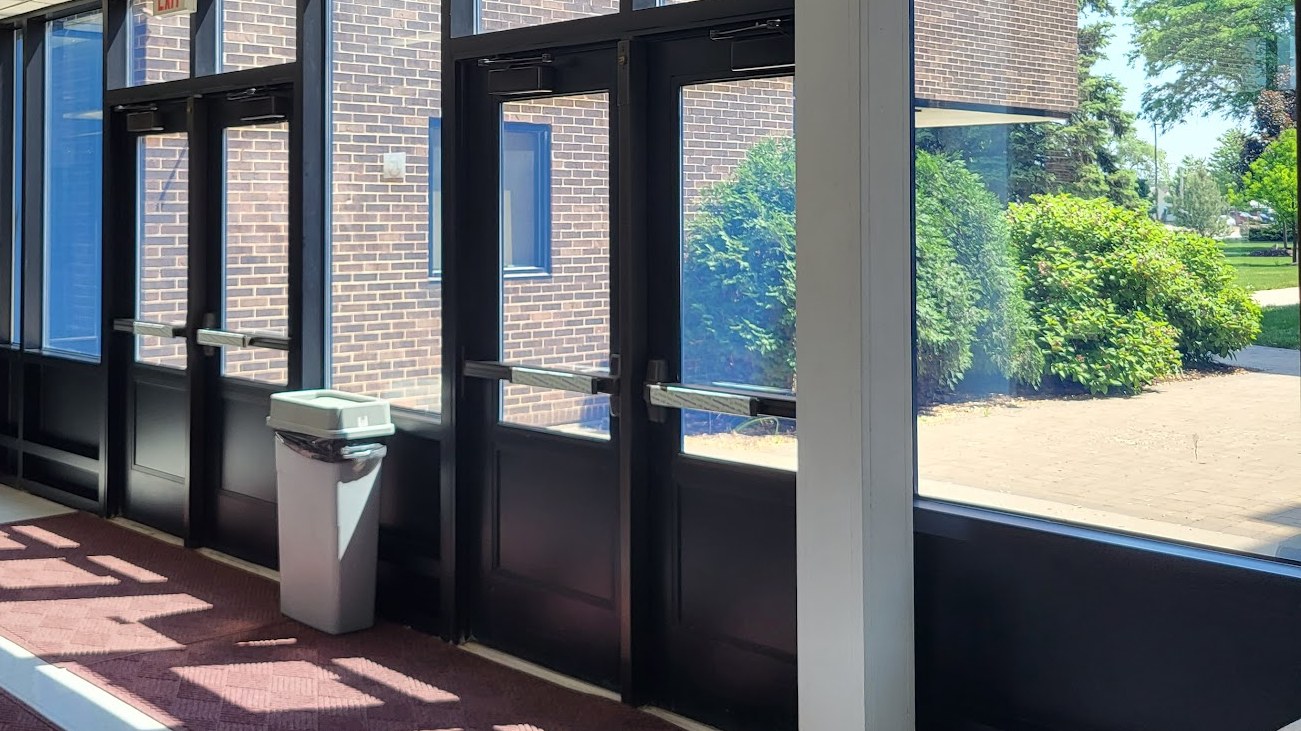
Security and Safety
Security Film Attachment Systems Explained
The attachment is what ties security film to the frame. How wet glaze and mechanical systems work, what the frame needs, and how to care for them.
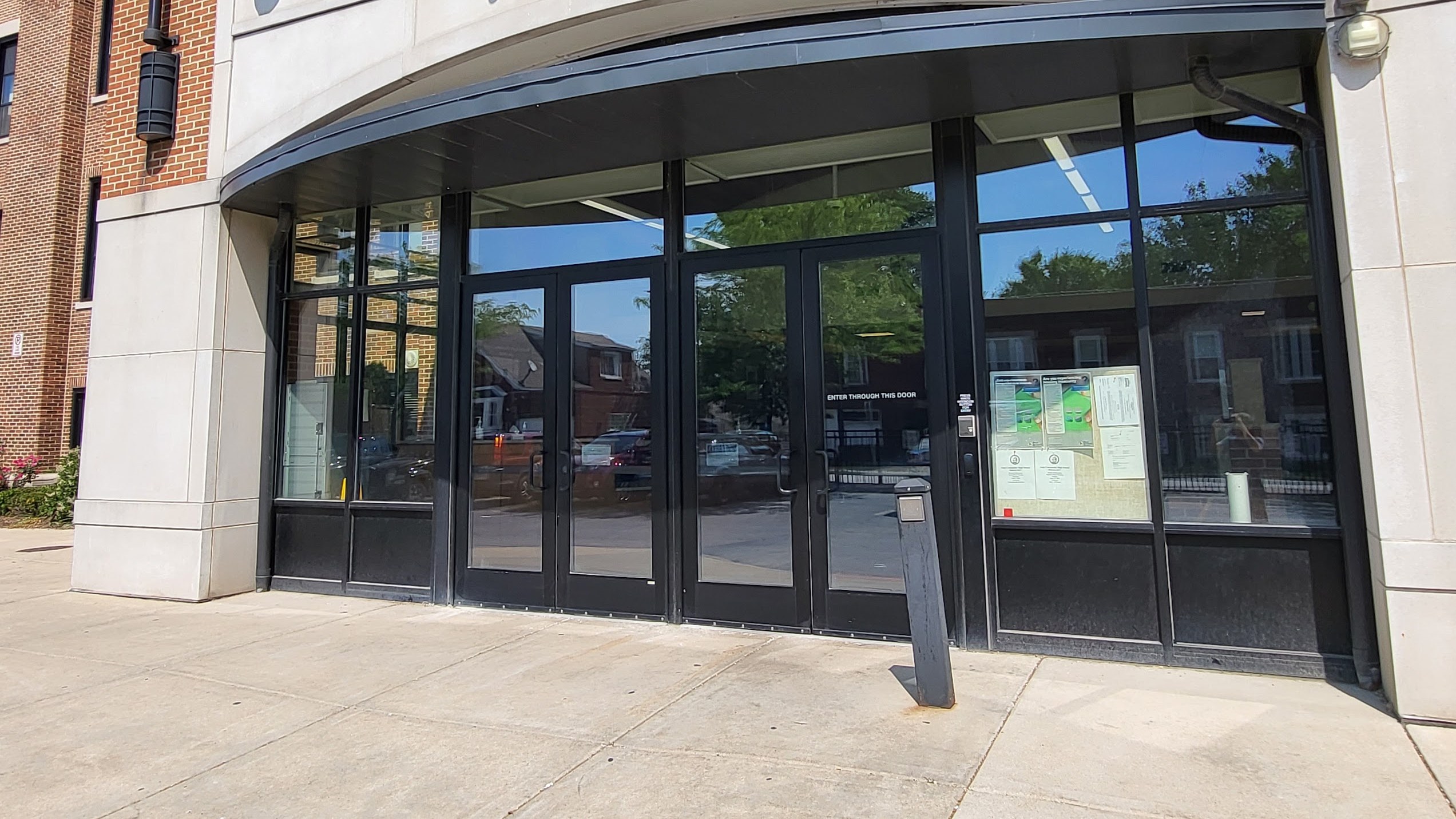
Security and Safety
Security Film, Laminated Glass or Polycarbonate for School Entrances
Security film, laminated glass and polycarbonate solve different problems at a school entrance. How to tell which one your doors and sidelights actually need.
Read Article: Security Film, Laminated Glass or Polycarbonate for School Entrances
Talk to a commercial window film contractor
AAA Glass Tint has served the commercial window film market since 1984. We assess the glass, the frames and the openings before recommending anything, and we install our own work.